Indiana Expands Emergency Rescue Law and Modernizes Animal Cruelty Standards
By Nicole Pallotta, PhD, Senior Research Scholar in Animal Law and Policy
Summary: Effective July 1, 2026, Indiana’s House Enrolled Act 1165 grants full civil and criminal immunity to members of the public who rescue endangered animals from locked vehicles, modernizes animal cruelty standards, amends domestic violence animal cruelty to address coercive control, and removes the monetary cap for felony theft—implicitly acknowledging animals have worth beyond their market value. These updates represent an important shift in the legal status of animals, moving away from a strict property framework toward a more nuanced recognition of sentience. However, this evolution remains inconsistent.
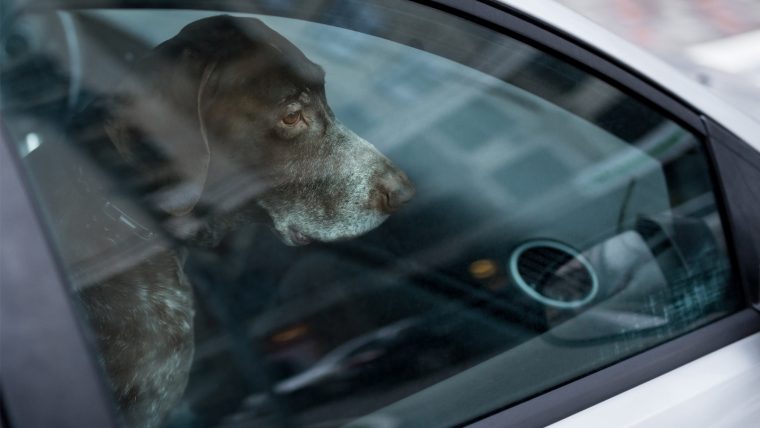
Indiana has made an important update to its emergency rescue law pertaining to removing an endangered domestic animal from a locked vehicle. 1While the law applies to any situation where an animal appears to be in imminent danger (including extreme cold), the most common scenario is dogs left in hot cars. This amendment is part of House Enrolled Act 1165, an omnibus bill that also includes important updates to Indiana’s animal cruelty provisions.
Emergency Rescue Immunity
Under Indiana’s previous law, enacted in 2017, bystanders who forcibly entered a locked vehicle to rescue an animal in distress were required to pay for 50% of the repair costs for damage to the vehicle (e.g., a broken window). 2 Effective July 2026, HEA 1165 removes this partial liability rule to provide full civil and criminal immunity, bringing it in line with Indiana’s law pertaining to children left in hot cars.3
These laws—often referred to as “hot car” or “Good Samaritan” laws—shield members of the public from liability when they intervene to rescue endangered people or animals from locked vehicles, provided certain conditions are met.4 While some laws provide immunity only to law enforcement and first responders, stronger laws like Indiana’s also protect private parties5
In updating the law to provide full immunity to would-be rescuers, lawmakers cited the chilling effect of the previous “shared liability” mandate. As bill author Rep. Wendy McNamara said: “You don’t want to have people fearful of doing the right thing and getting a bill for 50% of the charges.”
This update was inspired in part by the volume of calls received each summer by Indiana law enforcement and animal control agencies about dogs in hot cars, highlighting the role of bystanders in protecting vulnerable community members—animal and human alike—from wholly preventable tragedies.
A growing trend over the last decade, the first Good Samaritan law pertaining to dogs in hot cars was passed in Tennessee in 2015. Several states, including Indiana, passed similar legislation over the next few years. Today about 15 states have emergency rescue laws that shield private parties from liability, although many of these only provide civil immunity.6 Indiana’s law is among the strongest, which grant full immunity under specific circumstances.
Modernizing Animal Cruelty Standards
The expansion of rescue immunity is part of a package that also includes important revisions to Indiana’s animal cruelty provisions. These amendments, which Vanderburgh County Prosecutor Diana Moers helped create, were sparked by actual local animal cruelty cases.
Rather than a few minor changes, Rep. McNamara characterized the legislation as a “comprehensive bill from top to bottom” and “an opportunity for the entire state to coalesce around a serious problem that we see happening not just here in Vanderburgh County but across the state.”7
Expansion of Aggravating Circumstances to include Death or Injury of an Animal
Indiana law provides a list of 14 aggravating circumstances that criminal courts may consider in sentencing determinations. As of July 1, 2026, it will add a new one: if the crime results in the death or serious injury of an animal.8 Unlike the emergency rescue law,9 here “animal” is defined broadly as any living vertebrate, except for a human being.
Aggravating circumstances already on this list include:
- if the victim was a person with a disability, or mentally or physically infirm
- if the offender was in a position having care, custody, or control of the victim.
- if the victim’s death or injury resulted from shaken baby syndrome or abusive head trauma (a form of child abuse).
- if bias against the victim or group was a motivating factor for the crime.
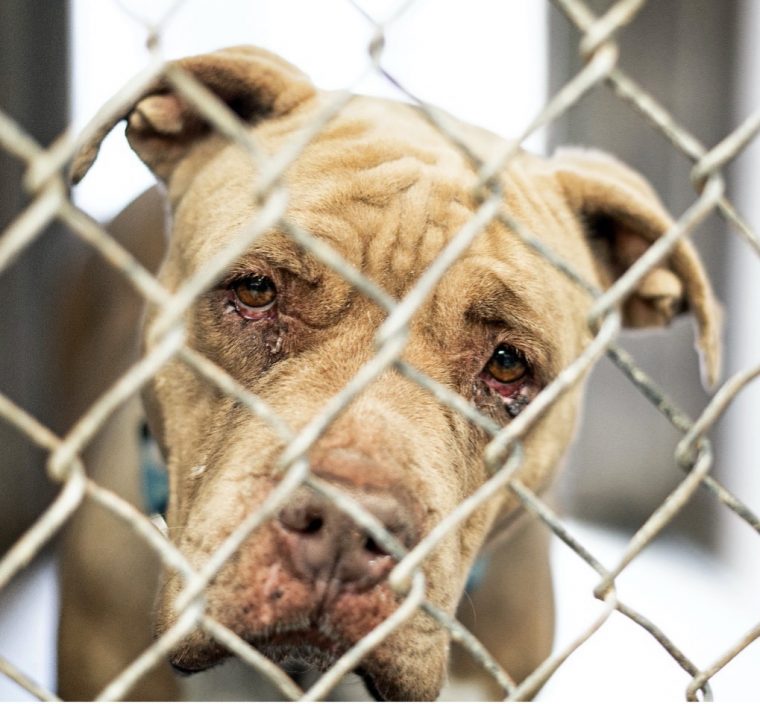
Of the previous aggravating circumstances, none mentioned animals. This update reflects a trend toward increasing legal recognition of the vulnerability of animals, understanding them as victims of crime rather than damaged objects.10 By placing animal harm alongside the injury of vulnerable or dependent humans, the law allows for interventions and sentencing suited to the specific situation, acknowledging that animals are unique individuals.
Felony Theft of an Animal
Interestingly, another update to Indiana law places animals squarely alongside inanimate property. In an amendment to the theft statute pertaining to types of stolen property that elevate a misdemeanor to a felony, “domestic animal” was added alongside theft of a motor vehicle or parts of a motor vehicle.
While increasing the penalties for theft of an animal is intended to reflect their value, the juxtaposition of sentient beings with car parts underscores a tension within animals’ current legal status. Although classified as property under the law, animals are distinct from other types of property in that they are living beings and not inanimate objects. The law is beginning to evolve to clarify that animals should be treated differently from inanimate property, but this evolution has been uneven, with progress varying both by type of animal and area of law.
Although theft of a companion animal is a property crime in the current legal context, there are ways to clarify that animals are a distinct category whose “theft” would be more accurately characterized as abduction.
For example, the UK recently passed the Pet Abduction Act, which recognizes the emotional impact of abduction on the animal herself—not just the distress experienced by her guardian—and makes it clear that animals have a special legal status beyond mere property, implicitly recognizing them as legal subjects and crime victims.11 While the UK’s Pet Abduction Act is a standalone criminal offense, Indiana’s approach is an enhancement of an existing property statute.
However, although not phrased as such, Indiana’s new law contains elements of an “abduction” versus “theft” model. Before HEA 1165, stealing an animal was only a felony if the animal was worth a certain amount of money (usually over $750). The July 2026 update makes stealing a “domestic animal” a Level 6 felony regardless of the animal’s economic value—making it clear the law is about more than property.
By removing the previous monetary threshold required for a felony charge, Indiana has signaled that a domestic animal’s worth is no longer tied to their market value—a significant step toward treating these incidents more like abductions of sentient beings than simple thefts of property.
Standards of Care Include Individual Characteristics
HEA 1165 also strengthens Indiana’s definition of “neglect” by clarifying standards of care. While failing to provide food or drink was already defined as neglect, further guidance was added. For example, food must be “provided in a sufficient quantity to maintain the animal’s health and normal development.” Additionally, food must be unspoiled and water cannot be frozen.12
Indiana’s law has separate provisions for neglect, which is a misdemeanor, and torture, which is a felony. Leaving a dog or cat exposed to extreme temperatures was previously defined as neglect but has been elevated to the more serious crime of torture. Additionally, the definition of torture was expanded to consider an animal’s individual characteristics. The original misdemeanor provision was replaced with failure to provide an animal with adequate bedding and shelter.13
Replacing the previous narrow language—which only covered intentionally freezing or heating an animal to death—the 2026 law now defines torture more broadly as exposing an animal to heat or cold beyond their tolerance. Critically, this tolerance is determined by the animal’s individual characteristics, such as age, health, medical conditions, and physical traits.

Rep. McNamara used her own dogs as an example, one of whom is a Siberian Husky who “loves to sit outside in zero-degree temperatures,” while the other is a 20-lb mutt who “would not want to be out in the cold for five minutes.” She noted: “What this bill takes into account is that there are differences.”14
This is an important addition because one-size-fits-all conceptions of neglect fail to recognize that animals are individuals with different needs and vulnerabilities. While a baseline threshold for criminal neglect is necessary, provisions that consider the characteristics of the animal are more equitable and allow for interventions suited to the specific situation, recognizing that animals are unique individuals.
Beyond these updated definitions, the law also lowers the threshold for felony charges. While torture traditionally required intentional malice, the 2026 law expands the definition to include reckless acts—such as starvation or extreme temperature exposure—recognizing that disregard for an animal’s life can be just as grievous as intentional harm. Previously, a felony charge typically required the animal to die. Now, an act is elevated to a Level 6 felony if it results in serious permanent disfigurement, unconsciousness, or the loss of function of a limb or organ. Additionally, any act of animal cruelty committed in the presence of a minor is now an automatic felony. This recognizes the severity of non-lethal violence and the psychological impact of witnessing such acts.
Definition of Domestic Violence Animal Cruelty Expanded
HEA 1165 also expands the definition of domestic violence animal cruelty. Domestic violence animal cruelty was previously a felony only if the animal were killed. The new law expands this provision to include abuse, abandonment, and neglect:
A person who knowingly or intentionally: (1) abuses; (2) abandons; (3) kills; or (4) neglects; a vertebrate animal with the intent to threaten, intimidate, coerce, harass, or terrorize a family or household member commits domestic violence animal cruelty, a Level 6 felony.15
The expansion recognizes the role of “coercive control”—where an abuser uses non-lethal abuse, neglect, or the threat of harm to a beloved animal as a way to terrorize a household member or prevent a victim from leaving. Previously, these intimidation tactics were often only misdemeanors unless the animal died. Now, using an animal to leverage control over a human is a Level 6 felony.16
Indiana’s new law reflects a trend toward strengthening the legal connection between animal abuse and domestic violence or coercive control. For example, in 2025, California expanded the definition of stalking to include threats against a person’s animals.17 In 2025, Georgia and Pennsylvania passed legislation permitting companion animals to be included in domestic violence protection orders.18 As of 2026, 42 states and D.C. and Puerto Rico have enacted legislation that includes provisions for pets in DV protection orders.19
The Utility Hierarchy and Legal Gaps
HEA 1165 also increases the penalty for killing a “law enforcement animal” from a Level 6 to a Level 5 felony. The reasoning here seems to differ from the update to the theft statute, which now includes companion animals alongside inanimate property like cars but in practice advances animal status because it removes the previous monetary cap—the implication being that all stolen pets “count” regardless of their market value. The law enforcement animal provision appears to be rooted in the obverse logic: their death is taken more seriously (as represented by a more severe sentence) not because of their intrinsic worth but because of their economic value.
In arguing for the stronger penalty, Rep. McNamara reportedly said the Level 5 felony was “necessary because of the sheer amount of money invested in training the dogs.” This reinforces a legal hierarchy based on an animal’s utility to humans, rather than their inherent value as a sentient being.
In addition, a person convicted under this section can be required to make restitution, including reimbursement of the cost of replacing the animal, which may include the cost of training. While this provision was already in the law, it reinforces a market value/strict property framework not apparent in the other amendments discussed here, and highlights how law enforcement animals are treated as high-value tools of the state.
Furthermore, it must be noted that these enhanced standards contain voluminous exemptions that underscore the uneven nature of animal protection. Most notably, Indiana’s animal cruelty chapter does not apply to activities by research facilities registered under the federal Animal Welfare Act. Again, this means that while dogs defined as family members are protected by modernized standards of care, dogs in laboratories remain uncovered by these state advances—a legal gulf seen not just in Indiana, but in every state. These exclusions mean that animals’ legal status remains tied to their utility or location rather than their capacity to suffer.20
Other exemptions include:
- fishing, hunting, or trapping;
- acceptable farm management practices;21
- destruction of a vertebrate animal defined as a pest, except for a rodent that is not a nuisance;22
- and destruction of or injury to a fish.23

Conclusions
Broadening the scope of lawful emergency rescue to include civilians provides more protection to vulnerable animals trapped in dangerous and potentially deadly situations. By empowering community members to intervene, the law recognizes the inherent value of companion animals’ lives beyond their status as someone’s personal property. It also prioritizes the animal’s well-being over the vehicle owner’s property rights. While a positive advance, this recognition is circumscribed in significant ways.
For example, many emergency rescue laws are narrowly written to exclude farmed animals and apply only to animals kept as companions—even though cows, pigs, chickens and other farmed animals suffer no less in extreme temperatures. Further, even within this narrow tailoring, companion animals are not treated equally.
Companion animals defined as family/personal property may be seeing the most direct legal advancements—particularly when compared to farmed animals or animals defined as pests, who in many contexts are mercilessly treated as if they were objects. However, there is much that remains to be done to ensure companion animals’ physical safety as well as their psychological well-being.
Additionally, there is a vast legal gulf between animals defined as personal property or family members and those defined as corporate property or research tools. A dog who is a beloved family member in one context may be confined to a cage, denied social interaction, and subject to painful experiments in another. The same exact animal can have very different legal protections even though they have the same capacity to feel pleasure and pain.
Activists are increasingly challenging this juxtaposition—where an animal’s right to be free from suffering is conditional upon their location and social utility—through a variety of means, including direct action. For example, organizations like Direct Action Everywhere advocate that the legal system should accommodate open rescue, where activists remove sick or injured animals from laboratories and factory farms while documenting the conditions. Their aim is to establish a legal precedent that protects advocates from criminal charges when the “theft” is the rescue of a suffering animal—creating a legal parallel to the immunity protections Indiana now provides for those who rescue dogs from hot cars.
A high-profile example occurred in May 2026, when roughly 1,500 beagles were released to shelters following a sustained campaign against research facility Ridglan Farms, including an open rescue in which 22 beagles were taken.24 This strategy forces a direct comparison between breaking a car window to save a dog and opening a lab cage to save a dog, challenging the law to reconcile why one is considered a “Good Samaritan” act and the other a felony.
While much remains to be done, systemic change is often incremental. By modernizing animal cruelty standards, HEA 1165 helps carve out recognition that animals are more than property and have worth beyond their market value—a cornerstone of building stronger legal protections. The removal of a monetary cap for felony theft implicitly acknowledges the role of animals as family members not just personal property, as does their inclusion in domestic violence protections. Adding the death of an animal to aggravating circumstance for sentencing likewise reflects their value beyond mere property. The updated standards of care also acknowledge that animals are individuals with different characteristics that make them more or less vulnerable under certain conditions.
While the property framework remains the bedrock of the law, these updates serve as a vital bridge toward a future where a victim’s legal protection is determined by their capacity to suffer rather than their social utility—acknowledging that all animals should count as someones rather than somethings.25
Any opinions contained in this article are the personal views of the author. They are not necessarily representative of the opinions or views of the Animal Legal Defense Fund or any clients. This information is presented for informational purposes and does not constitute legal advice.
Further Reading
- Animal Legal Defense Fund. “Animals Included in Protection Orders.”
- Animal Legal Defense Fund. “How Animals Differ from Other Types of ‘Property’ Under the Law.”
- Animal Legal Defense Fund. 2025 U.S. Animal Protection Laws Ranking Report. 20th annual edition.
- Fitzgibbons, Natalie. “New State Law to Increase Penalties for Animal Abuse, Neglect.” Indiana Public Media, March 19, 2026.
- Gorman, James. “1,500 Beagles From Troubled Research Facility Are Getting New Homes.” New York Times, May 4, 2026.
- Pet Abduction Act 2024. (U.K.).
- Rosengard, David B. “Applying Crime Victims’ Rights to Victims of Animal Maltreatment.” In Animals as Crime Victims, edited by Lacey Levitt, David B. Rosengard, and Jessica Rubin, 133–154. Cheltenham, UK: Edward Elgar Publishing, 2024.
References
- HEA 1165 defines “domestic animal” as a “household pet.” It explicitly excludes animals defined as “livestock.”
- Unless the owner of the vehicle waived this right.
- https://law.justia.com/codes/indiana/title-34/article-30/chapter-29/section-34-30-29-1/
-
The conditions are that a person must:
- reasonably believe that the domestic animal is in imminent danger of suffering serious bodily harm if they remain in the motor vehicle;
- determine that the motor vehicle is locked and that forcible entry is necessary to remove the animal; first call 911 or otherwise attempt to contact a law enforcement officer, firefighter, animal control officer, or another emergency responder;
- use no more force than is reasonably necessary to remove the animal from the motor vehicle;
- and remain with the animal until a law enforcement officer or other emergency responder arrives at the scene.
- There are three different types of “hot car” laws, and many states have more than one. See ALDF’s map here: https://aldf.org/project/an-avoidable-tragedy-dogs-in-hot-cars/
- See: https://aldf.org/project/rescue-of-animals-from-unattended-vehicles/
- “Diana Moers, Rep. McNamara tout new penalties for animal abuse.” https://archive.ph/PqsK1#selection-313.0-313.62
- HEA 1165 adds: “if the offense resulted in the death or permanent loss or impairment of the function of a bodily member or organ of an animal.”
- Which applies to animals defined as “household pets” and expressly excludes “livestock.”
- For more on this issue, see: Animals as Crime Victims: Development of a New Legal Status
- For more on this law, see: Pet Abduction Bill Becomes Law in England and Northern Ireland.
- “Food and drink must be provided in a sufficient quantity to maintain the animal’s health and normal development, and in a form that is unspoiled, uncontaminated, and otherwise fit for consumption. Water that is frozen is not sufficient to maintain an animal’s health and normal development.”
- Adequate bedding means “sufficient to permit a domestic animal to remain dry, reasonably clean, and to maintain a normal body temperature” and adequate shelter is “a covered enclosure sufficient to protect an animal from the elements and to prevent suffering or injury to an animal, based on the climate and the animal’s species, age, and health.”
- WFIU Staff, “New State Law to Increase Penalties for Animal Abuse, Neglect,” WFYI, March 21, 2026, https://www.wfyi.org/public-affairs/2026-03-21/new-state-law-to-increase-penalties-for-animal-abuse-neglect; “Diana Moers, Rep. McNamara Tout New Penalties for Animal Abuse,” Evansville Courier & Press, March 11, 2026, archived May 7, 2026, https://archive.ph/PqsK1#selection-313.0-313.62.
- Indiana law categorizes felonies into Levels 1-6 (with a separate category for murder), with Level 1 being the most severe.
- For more on coercive control, see ALDF’s resource: Laws with animal cruelty added to their definitions of “coercive control.” See also: Lohmann S, Cowlishaw S, Ney L, O’Donnell M, Felmingham K. The Trauma and Mental Health Impacts of Coercive Control: A Systematic Review and Meta-Analysis. Trauma Violence Abuse. 2024 Jan;25(1):630-647. https://pmc.ncbi.nlm.nih.gov/articles/PMC10666508/; Wakeham, M. (2025). Animal abuse as a strategy of coercive control. Journal of Gender-Based Violence (published online ahead of print 2025). Retrieved May 1, 2026, from https://doi.org/10.1332/23986808Y2025D000000076
-
“SB 221 Signed into Law to Protect Stalking Victims from Threats Against Their Pets”
- Georgia: https://www.animallaw.info/statute/ga-domestic-violence-%C2%A7-19-13-4-protective-orders-and-consent-agreement; Pennsylvania: https://www.animallaw.info/statute/pa-domestic-violence-%C2%A7-6108-relief
- For more, see ALDF’s resource: Laws that include animals in protection orders. “Not all of these laws are created equal. . . . a handful merely provide that the court may prohibit the abuser from harming the animal — which is something that is already proscribed by state animal cruelty laws. Additionally, many of these laws are limited by species.”
- See: Stacy M. Lopresti-Goodman, “Dogs suffer at Ridglan because of out-of-date federal rules,” The Cap Times, March 20, 2026; Stacy Lopresti-Goodman, “There are many more Ridglans. Here’s what the government should do to protect every dog at risk of laboratory testing,” Animal Legal Defense Fund, April 30, 2026.
- “Acceptable” is not defined.
- “Pest” is defined under IC 15-16-5-24.
- On the exemption of fish, see previous Animal Law Update: Animal Cruelty Charges Dropped Because Fish Are Not ‘Animals’ Under North Carolina Law.
- Notably, the facility only released the animals after requiring rescue groups to purchase them for a substantial sum, highlighting the persistent treatment of research subjects as commercial assets even in the context of rescue.
- See: David B. Rosengard, “Applying Crime Victims’ Rights to Victims of Animal Maltreatment,” in Animals as Crime Victims, eds. Lacey Levitt, David B. Rosengard, and Jessica Rubin (Cheltenham, UK: Edward Elgar Publishing, 2024), 133–154.


Sign Up!
Join the Animal Legal Defense Fund's email list to stay up to date on lawsuits, legislation, and regulations affecting animals.
How We Work
Related
-
Animal Bill of Rights
Animal cruelty is defined differently in every state’s laws, but generally includes both abuse and neglect. Unfortunately in each state, the law treats animals as property instead of living, sentient beings. That’s why the Animal Legal Defense Fund stands for -
NYC Council Passes Romanch’s Law in Historic Vote to End Horse-Drawn Carriages by 2028
The bill will responsibly phase out the horse drawn cab industry to make NYC safer for allOctober 22, 2026 Press Release -
ALDF Announces Caitlin Hawks as New Executive Director
The Animal Legal Defense Fund today announced Caitlin Hawks as its new executive director.October 21, 2026 Press Release