
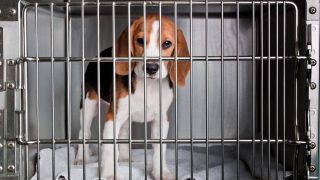
Animals in Laboratories
Unfortunately, most animals in laboratories are not protected by the law.

Broad Overview:
More than 100 million animals are used in experiments and for testing in the United States each year. The primary federal law protecting some animals in laboratories is the Animal Welfare Act (AWA). But this law only establishes minimum standards for shelter, food, and water. And unfortunately, it excludes the overwhelming majority of purpose-bred animals who are used in experiments — mice, rats, birds, and fish.
Animals Suffer in Labs
Animals confined in laboratories are sentient beings with the capacity to feel pain and suffer. The United States Department of Agriculture (USDA) tracks the number of AWA-regulated animals in laboratories.
In 2025, the USDA reported 751,355 AWA-covered animals in laboratories, including primates, dogs, cats, rabbits, pigs, guinea pigs, and hamsters. The USDA does not track the millions of mice, rats, birds, fish, and farmed animals used in agricultural research who make up 95–98% of the animals confined in laboratories. But researchers estimate that there are more than 100,000,000 of them suffering in laboratories, with no legal protection.
In 2025, 31% of protected animals were used in studies that intentionally caused physical pain and distress, some of which was purposefully not alleviated. These numbers don’t reflect the psychological suffering caused by confinement, social isolation, and an inability to engage in natural social interactions with other members of their species. Decades of research show that laboratory confinement can cause abnormal behaviors, anxiety, depression-like symptoms, and self-injury, particularly in highly social species such as dogs and primates.
How Animals are Used in Laboratories
Unlike many other countries, the U.S. does not publish comprehensive information about how animals are used in laboratories. Government institutions that conduct and fund animal experimentation also often withhold laboratory records that the public has a right to see. As a result, the public has limited insight into the experiments being conducted and the harms animals experience.
Based on published studies, most animals are used in what is known as curiosity-driven research to understand basic biology. Animals are also commonly used for disease research, drug and chemical toxicity testing, surgical training, food and product testing, and psychological experimentation.
This research entails incredibly painful procedures, including injecting or force-feeding chemicals into animals to learn what dose kills them. Not only are these methods cruel, they are also ineffective. Estimates state that more than 90% of drugs and treatments that work in animal models fail in human clinical trials.
Fighting for Animals Used in Research
Animal research has been all over the news, with major wins and important progress for animals who have long suffered in laboratories. At this pivotal moment for animals in labs, we checked in with two of ALDF’s resident experts.
Moving Away from Animal Experimentation
ALDF and other animal advocates are working with lawmakers across the country to ban animal testing and retire as many animals from labs as possible. Efforts are also underway to hold government agencies accountable, press for greater transparency, and to replace animal testing with more humane and effective technologies.
Much animal experimentation is allegedly conducted to expand scientific knowledge, rather than to develop a specific treatment or cure. Animal experimentation has also been the default for developing and testing new drugs and treatments and industrial chemicals. But advances in medicine and science are making animal experimentation obsolete and even more egregious than in the past.
In recent years, federal lawmakers from both parties have shown increasing interest in addressing the use of animals in research, driven by growing scientific, ethical, and fiscal concerns. Lawmakers have introduced several legislative proposals aimed at reducing reliance on animal testing, expanding retirement and adoption opportunities for animals in the research industry, enhancing transparency and accountability in federally funded research, and advancing the development and use of alternatives.
In 2022, Congress enacted the Food and Drug Administration (FDA) Modernization Act 2.0 that removed the outdated requirement that drugs be tested in animals before human trials. The law now allows companies to use non-animal methods. In recent years, the FDA has also released a roadmap to reduce animal testing and issued guidelines to encourage and promote the use of non-animal technologies for drug testing.
In 2026, the Environmental Protection Agency (EPA) recommitted to its goal of eliminating most testing on mammals by 2035. The agency retired many animals from its laboratories and updated its list of cutting-edge alternatives it accepts as replacements for animals, also known as New Approach Methods (NAMs).
The National Institutes of Health (NIH) is the single largest funder of animal experimentation in the world, spending billions on animal experimentation each year. The agency is moving away from animal testing and toward NAMs, including organoids, computational models, and microphysiological systems. In 2026, the NIH announced a $150 million dollar investment in NAMs as part of its commitment to reducing animal testing.
Data from the USDA show that the use of dogs and cats in research has declined dramatically over the past 50 years. At the same time, advocacy efforts have helped reduce the supply of animals available for experimentation. Large commercial breeding facilities that supply beagles for experimentation, including Envigo and Ridglan Farms, have been shut down following allegations of serious animal welfare violations. Other suppliers, such as Inotiv, that breed other animals exploited in research, have entered into bankruptcy proceedings.
Not only are scientists moving away from animal experimentation, but the majority of Americans oppose the practice, and are very concerned for the well-being of animals in laboratories. Research shows that most Americans believe that stronger government programs and policies are needed to protect animals in labs. These developments reflect a broader shift away from the use of animals in laboratories.
ALDF’s Work for Animals Exploited in Experimentation
Through litigation, legislative advocacy, regulatory enforcement and reform, and public education, ALDF seeks stronger protections for animals who are currently in laboratories. We also work to reduce and ultimately end the use of animals in experimentation altogether and ensure that there are policies requiring their adoption or rehoming to true sanctuaries when no longer being used.
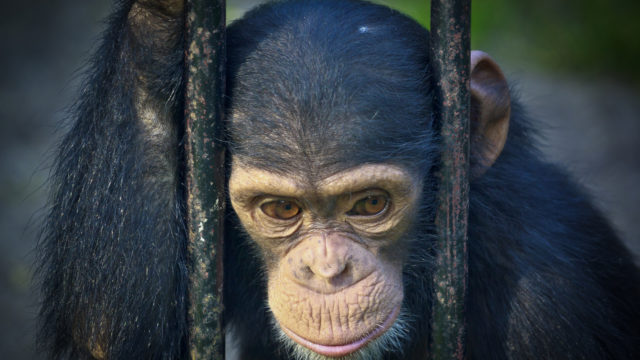
92% of drugs tested on animals fail to meet the standards for human use, and this rate is growing, not improving.
Food and Drug Administration
Take a Stand Against Animal Testing
Did you know an estimated 100 million animals are used in testing and research in the United States every year? Take a stand against animal testing by signing our cruelty-free pledge today.
Related Cases
-
Challenging the USDA’s Secret Policy on Laboratory Inspections
Rise for Animals v. USDA
-
Challenging University of Wisconsin’s Censorship of Speech on Social Media
Krasno v. Board of Regents of the University of Wisconsin
Looking for case and legal resources? View Resources
See More