Fighting for Animals Used in Research
Animal research has been all over the news recently, with major wins and important progress for animals who have long suffered in laboratories. You make it possible for ALDF to fight for animals in the research industry, from successfully advocating for statewide bans on the sale of animal-tested cosmetics and other consumer products, to winning lawsuits protecting the First Amendment rights of laboratory whistleblowers, to rescuing eight now-thriving pigs whose lives otherwise would have ended in a research lab, and beyond.
At this pivotal moment for animals in labs, we checked in with two of ALDF’s resident experts:

Matt Rossell, Campaign Manager
Matt’s prior work as an undercover investigator saw him spending two years documenting conditions in a primate laboratory, then using the evidence to force change in the government oversight of research facilities; he has also advocated for countless dogs to be adopted from labs.
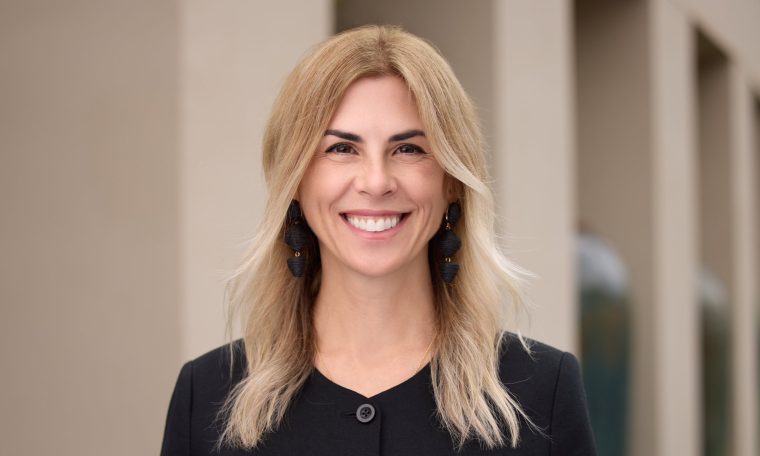
Stacy Lopresti-Goodman, PhD, Animal Law Education and Scholarship Program Director
Stacy is a behavioral scientist and former professor whose work has focused on the psychological impacts of laboratories on dogs and primates; she also previously led a campaign that successfully shut down the University of Connecticut’s primate research lab.
Matt, how has your background in undercover work shaped your career in animal protection and your work at ALDF?
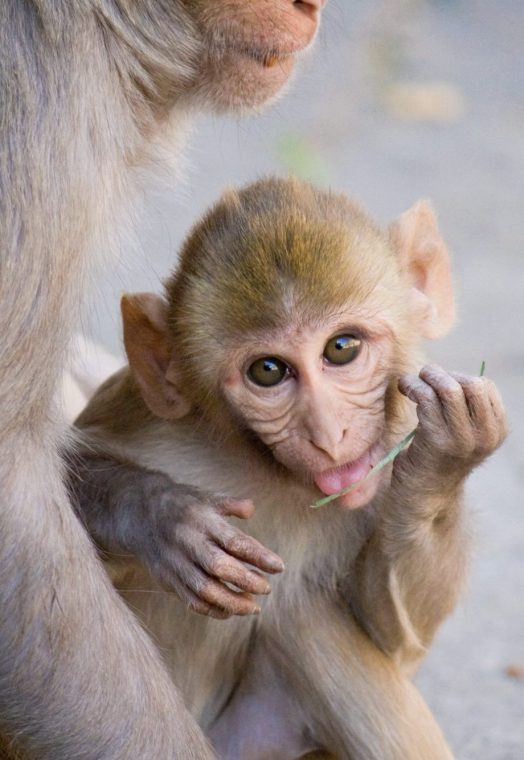
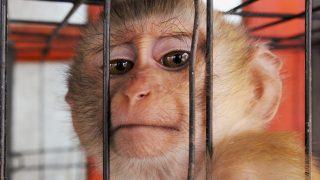
Rossell: Working undercover was incredibly difficult and left me often overwhelmed by feelings of guilt, anger, and despair. I had to decide every morning whether I could return for another day. There was very little I could do to help these animals in real time, because my goal was collecting evidence to prove the regulatory system of oversight is failing to adequately care for the physical and psychological needs of the primates — thousands of whom are kept isolated and alone in barren, tiny steel cages for their entire lives.
When I look back at my time working undercover and how it has influenced my work in animal protection, I realize how much of a privilege it was to see firsthand what is going on and personally meet these animal victims. Though decades have passed, this work still feels like some of my best activism and continues to drive my passion to make a difference in my work at ALDF. I still tell the stories of those animals I met inside the labs and other places where I worked — I owe it to them — and by doing so I hope it continues to help animals suffering now.
Stacy, your work with primates and dogs rescued from research has found symptoms consistent with post-traumatic stress disorder (PTSD) in humans. Can you share some of the experiences that led to that conclusion?
Lopresti-Goodman: I’ve been involved in animal advocacy since the mid-1990s. When I studied human psychology during my doctoral training in the early 2000s, I realized I wanted to combine my academic and personal interests to help animals in laboratories. One thing that stood out to me was that researchers routinely use dogs and primates in cruel experiments to “model” human psychological trauma but would then deny that the animals in their labs were being traumatized. So, I set out to study whether animals released from labs showed signs of psychological distress and trauma.
Through caregiver interviews, behavioral observations at sanctuaries, and examination of their laboratory records, I found many chimpanzees exploited in invasive biomedical research exhibited symptoms of PTSD, including hypervigilance, social withdrawal, self-injurious behaviors, exaggerated fear responses, and chronic distress.
Similarly, in my research with dogs released from laboratories, I found increased fearfulness, attachment-related behaviors, and abnormal behaviors compared to non-laboratory dogs, suggesting that many continue to carry the psychological scars of their experiences long after leaving the lab.
Ultimately, I hope this research helps demonstrate that the harms of animal experimentation for individuals in laboratories are not only physical, but psychological. I hope this work provides further evidence for why we should move away from using animals in research altogether. Because they suffer the same way humans would.
What do you think the average animal advocate might not know, but should, about the animal research industry?
Rossell: What I learned from working within multiple research institutions is that frequently the protocols for animal experiments are designed to follow clinical trials in humans, attempting to duplicate data already established with people, or are being conducted in parallel to human studies. I also witnessed a lot of experiments that defied common sense — like baby monkeys with surgically implanted heart monitors intentionally terrorized to study shyness in children, and pregnant monkeys injected with nicotine, to then have their babies taken by C-section so their lungs could be dissected. Advocates might also be unaware of how commonly mistakes are happening in data collection, and all of which left me with zero confidence that anything useful is coming from the animal research industry.
Lopresti-Goodman: Most animals used in laboratories have little to no legal protection. The Animal Welfare Act, the primary federal law governing the use of animals in labs, excludes mice, rats, fish, and birds bred for research, who make up over 99 percent of animals used in experiments.
While some states allow animals used in experiments to be adopted when the studies end, most don’t, and there aren’t any federal laws requiring it. So virtually all animals are killed at the end of studies, rather than being rehomed. In addition to fighting to end animal use and to increase their protections while in labs, we need to be advocating for policies that allow their release when tests end or labs close.
What is a common misperception people might have about animal research?
Lopresti-Goodman: Animal testing is not only cruel; it’s also bad science.
I think many people assume animals are experimented on to directly advance human health or cure disease. But most animal experimentation is actually what we call “basic research,” conducted to satisfy human curiosity rather than to develop specific treatments or cures.
Even when animal experiments are supposedly intended to develop drugs for humans, estimates suggest that approximately 95% of drugs that appear safe and effective in animals fail in human trials. If more people understood the reality of animal experimentation, it would be harder to defend.
Rossell: I agree with Stacy completely. Most of the research I witnessed was in that basic research category. I sat as the alternate technician on the Institutional Animal Care and Use Committee, which is purported to be tasked with making sure the research proposals are useful and not duplicative, but I found it to just be a rubber stamp for any proposal that had money behind it.
Can you tell us about an animal you’ve met who helped shape your thoughts on this issue?
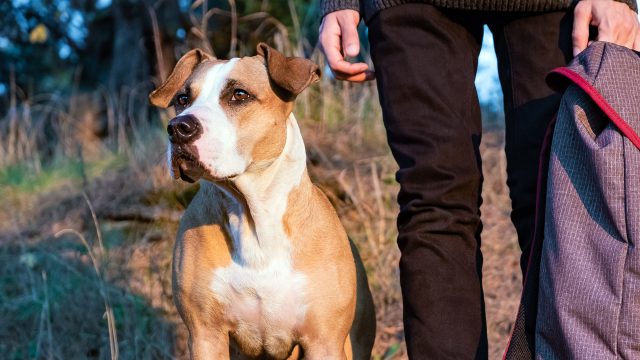
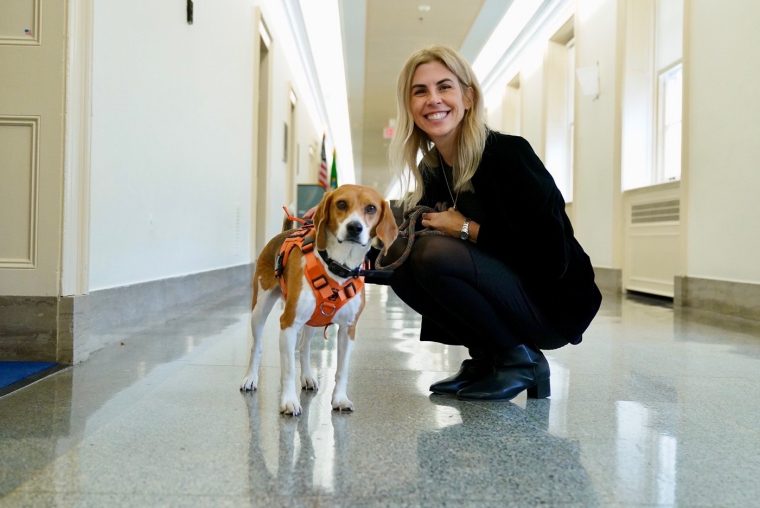
Lopresti-Goodman: In 2015, I was at an event where I met several beagles rescued from labs, including two dogs named George Washington and Alexander “Hammy” Hamilton. At the time, I was a psychology professor and primarily focused on primates in sanctuaries. But many of the dogs’ caregivers kept talking about how they had PTSD. And I realized that no one had studied this! So, meeting dogs like George and Hammy inspired me to be the first researcher to scientifically examine whether dogs rescued from labs would meet the criteria for PTSD. And some did.
Thankfully, my research also found that the longer dogs are out of the initially traumatizing lab environment and in safe, loving homes, the more they heal. In fact, my research concluded that they are significantly less aggressive to dogs or people, are equally trainable as other dogs, and are less likely to engage in some “unwanted” behaviors, like running away or chasing cars or other animals. So, I found despite any trauma they endured, they make great companions.
Rossell: She was known only as 16162, the identification number neatly tattooed in black ink on the inside of her thigh. She was treated as a mere data point, but she was so much more — a sensitive, smart, female rhesus macaque monkey, living most of her life alone. For a social primate, isolation is torture and she caught my eye because she was pulling out her hair and was nearly bald. As she languished in her cage, I tried everything I could to ease her suffering, from playing soothing ocean music to giving her cardboard tubes and cherry wood to chew on. She was incredibly clever, often banging her puzzle feeder against the side of the cage to force the treats out all at once, effectively outsmarting the device.
What makes you glad to be working on this issue specifically at ALDF?
Lopresti-Goodman: I’ve long admired ALDF’s work for animals. I even had an ALDF bumper sticker on my grad school laptop! Our student animal rights group reached out to ALDF for support during our campaign to shut down UConn’s primate lab, which resulted in the lab being closed and the university being fined and returning funding to the National Institutes of Health (NIH).
I feel so fortunate to not only be working at an organization that allows me to continue doing research to help animals, but has the infrastructure and expertise to turn this research into meaningful change for animals.
ALDF’s work spans litigation, regulatory advocacy, legislation, and education. That includes submitting expert comments to agencies overseeing animal experimentation, filing lawsuits against laboratories and federal agencies, and advocating for policies that can improve conditions for animals in labs, reduce animal tests, and support adoption programs for animals used in non-lethal studies.
Rossell: More than 25 years ago, when I left my job as a primate technician at the Oregon National Primate Research Center, ALDF helped me compile and file a massive complaint to the U.S. Department of Agriculture with all the evidence gathered from my two-year experience. I have long admired this organization and share the mission and belief that working on meaningful legal change for animals is the most effective advocacy that I can do. I am very proud to call the expert attorneys and professionals at ALDF my colleagues.
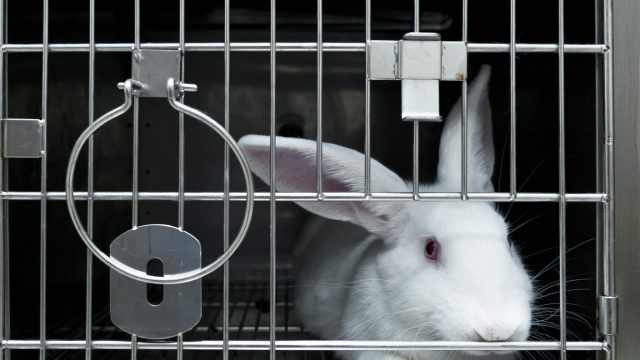

Did you know? Approximately 80 to 90% of biomedical research findings on animals fail to translate into humans.
Akhtar, 2015; Hay et al., 2014; U.S. FDA, 2004
If an ALDF supporter wanted to help a friend or family member understand the truth about animal research, what information would you suggest they share?
Lopresti-Goodman: The U.S. government is the largest funder of animal experimentation in the world. Therefore, we should let our representatives and members of Congress know we do not want our tax dollars funding the suffering of animals in experiments, especially when more human-relevant, non-animal methods exist.
We have the power to push for more ethical and effective science. Public pressure and awareness have already helped reduce the use of some animals in research over the past several decades, and continued advocacy can help accelerate that progress.
Rossell: Animal research continues because it is happening behind closed doors and for the most part out of public view, even though, as taxpayers, we are funding much of it. That is why all of the watchdog organizations like ALDF and many others are so important. Thankfully, these groups do the tedious work of reviewing public documents obtained through freedom of information laws (often requiring lawsuits to be filed to get institutions to comply) and publish exposés from whistleblowers and undercover investigations that shine a bright light on this secretive industry. I would encourage people to share these resources and websites with family and friends who are curious to know the truth.
Say a person loves animals, but is concerned that experimenting on them might be critical to curing disease. What would you tell them?
Lopresti-Goodman: Animal experimentation is outdated, ineffective, and cruel. The bottom line is, because of the differences between the physiology of human and non-human animals, we never know for sure what a drug is going to do until it is used in a human clinical trial. Animal testing fails miserably to predict accurate outcomes in people. Non-animal test methods provide equivalent or better scientific quality and relevance and are typically faster and less expensive.
What gives you hope for animals trapped in the research industry?
Lopresti-Goodman: Thankfully, the majority of Americans understand the harms and oppose animal testing. Data shows that the use of dogs and cats in research has significantly declined over the past 50 years and could end in the next decade. What gives me hope is that increased public pressure, legislative support from across the political spectrum, and advances in animal-free science may help expedite this process and move us toward a future where there are no animals in labs.
Rossell: As the science of new methodologies advances — such as computer modeling and “organs-on-a-chip” that replicate the complex functions of human organs using human cells — so does my hope for animals trapped in labs. Regulatory bodies like the Food and Drug Administration have ended the strict requirement that experimental drugs must be tested on animals before human trials, and major research organizations including the National Institutes of Health are shifting focus toward non-animal, human-based research technologies. One of the driving forces behind these important shifts is the public demand for humane, non-animal research, but our work is far from done. Even with this hopeful news, research on primates, for example, is on the rise. Please share this article with family and friends and look for opportunities to join ALDF in this effort, because the day when all these laboratory cages are empty cannot come soon enough for the animals currently trapped inside.
How ALDF Is Powering Change
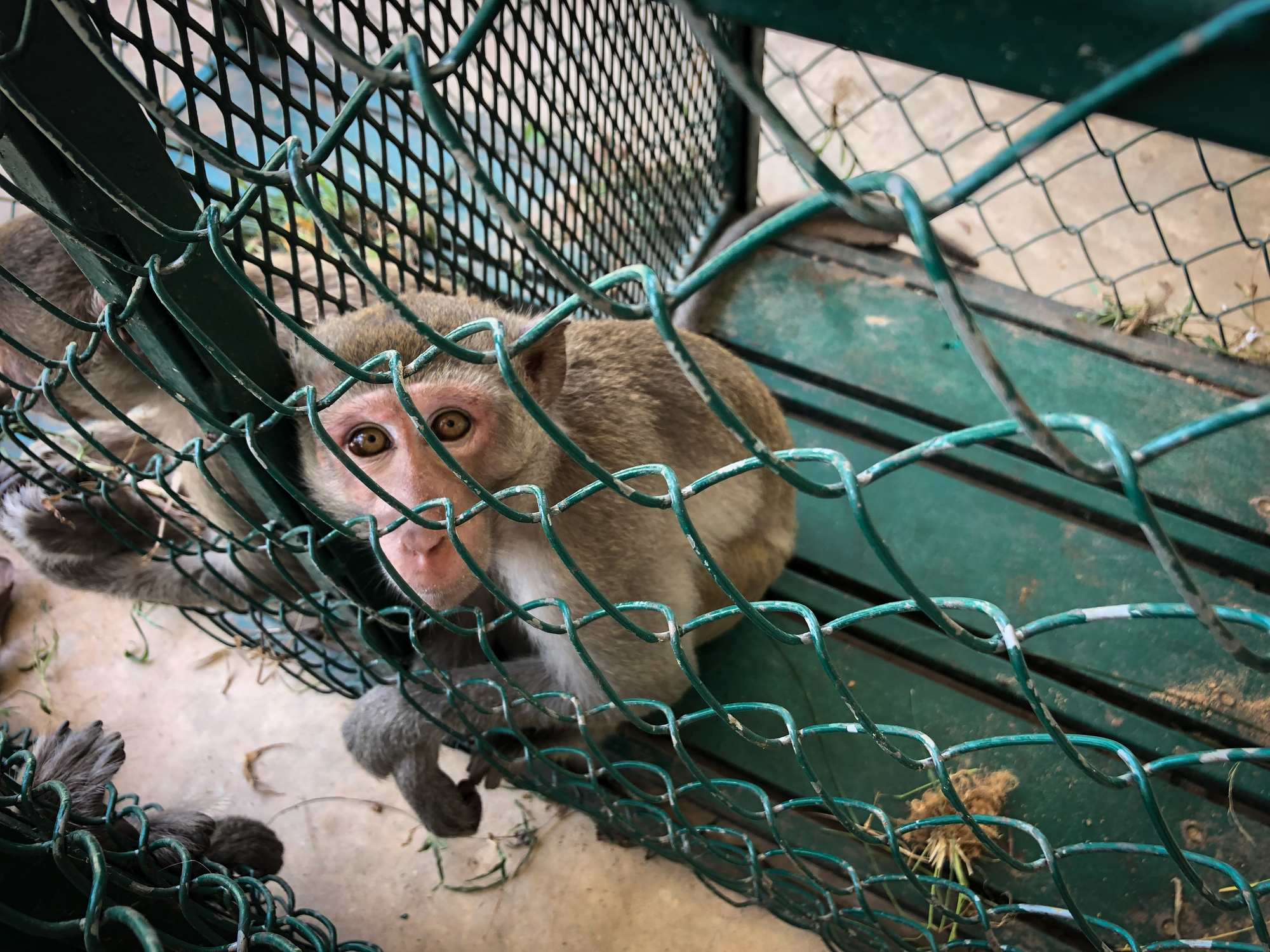
Oregon Health & Science University: Having spent years investigating OHSU’s controversial primate research lab prior to joining ALDF, Rossell was a leading voice that the university’s board of directors needed to hear from when considering whether to at long last shutter the facility and repurpose it as a refuge for monkeys previously used in research. Meanwhile, ALDF’s Legislative Affairs team was also hard at work lobbying on this issue.
Rossell provided critical testimony and traveled to Oregon for a key vote, when the board voted to move forward in exploring a proposal to convert the lab to a sanctuary. Unfortunately, recent reporting suggests OHSU is backtracking on these plans due to a lack of funding. OHSU’s primate lab is one of the largest in the country — about 1 in 20 monkeys and baboons used in research in the U.S. are held there — so it’s critically important that the fight carries on.
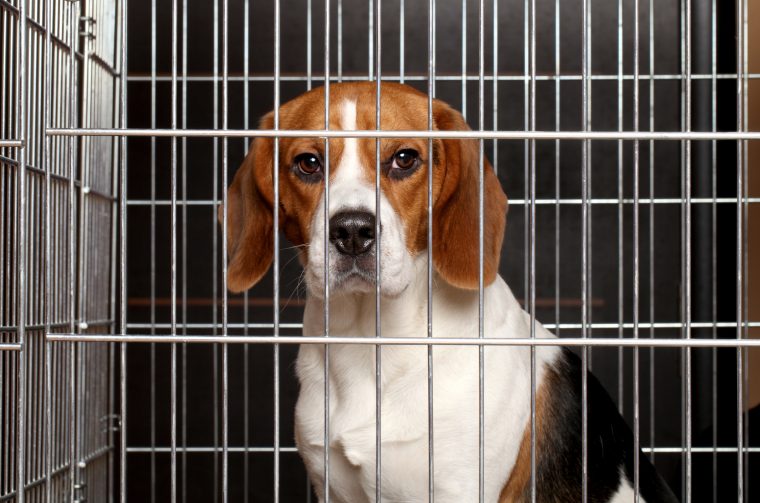
Dogs in research: You may have heard that 1,500 beagles were recently released to rescuers from Ridglan Farms, a notorious research and breeding facility. (Heartbreakingly, beagles are the dog breed most often used in experiments because their tendency to be sweet and docile even when subjected to pain makes them easy for researchers to work with.)
Prior to joining ALDF, Dr. Lopresti-Goodman was an expert witness in a lawsuit against Ridglan, and recently she led ALDF’s work providing expert comments to the U.S. Department of Agriculture, advocating for reforms to regulations governing dog breeding, housing, and socialization. “Having just enough room to spin in circles inside their cage meets the current requirements for ‘exercise,’” Lopresti-Goodman notes. “This is because federal regulations focus primarily on physical needs, including providing food, water, and shelter, while failing to account for animals’ psychological needs and the suffering caused by confinement, isolation, and deprivation.” ALDF’s official comments call for expanded consideration of the psychological impacts of research on animals including dogs. Lopresti-Goodman also urged the federal government to create policies allowing for the retirement and rehoming of dogs and primates when no longer used in experiments, among other critical reforms. Read her commentary on the issue.
Focus Area
How We Work
Related
-
Groups File Opening Briefs in LCFS Biogas Lawsuit
ALDF, as part of a coalition, filed an opening brief in a case to force California’s Air Resources Board to reform its Low Carbon Fuel Standard.September 29, 2026 Press Release -
Cascade County, Montana, Selected for Animal Cruelty Response and Prevention Program
The launch of the program includes a community survey to help the program address animal cruelty and support abuse prevention in Cascade CountySeptember 15, 2026 Press Release -
Clean Water Advocates File Lawsuit Over Oregon Factory Farm General Permit
A coalition of public interest organizations filed a lawsuit challenging the Oregon Departments of Agriculture and Environmental Quality’s new factory farm general permit.July 14, 2026 Press Release