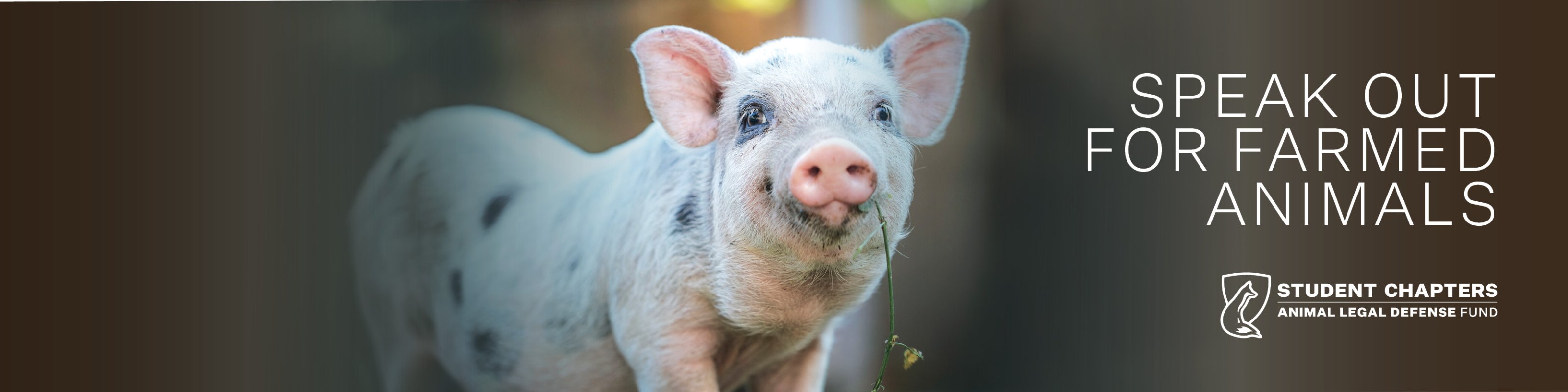
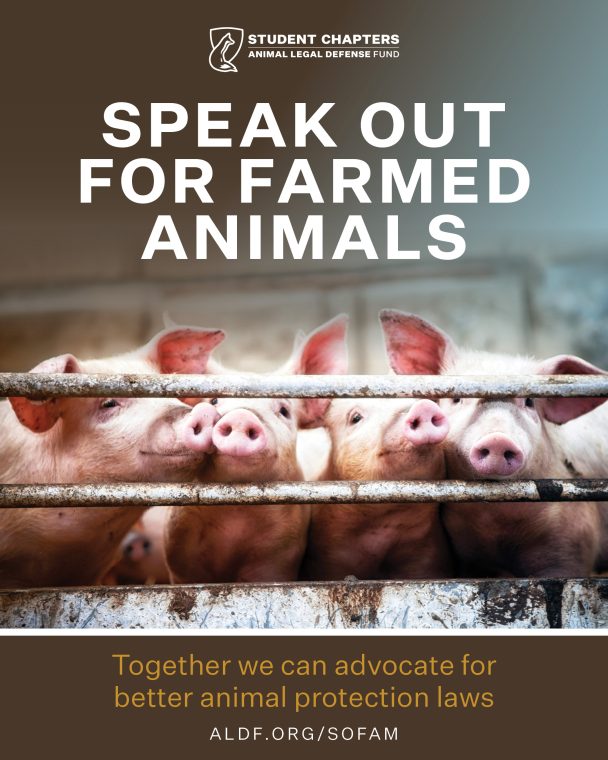
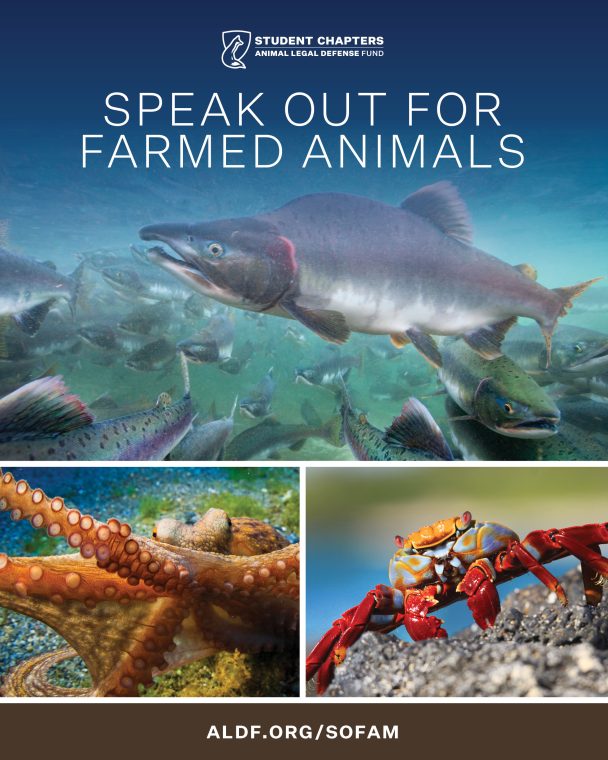
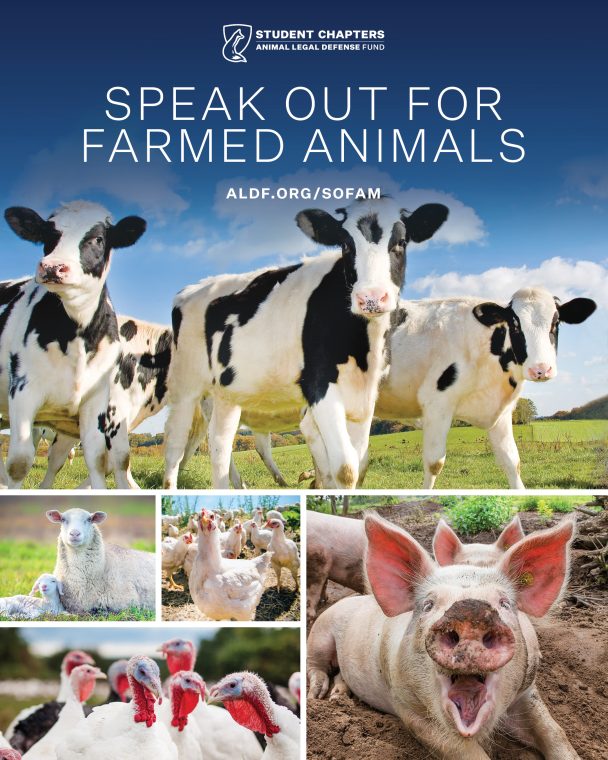
SALDF Chapters across the country celebrate October as Speak Out for Farmed Animals Month (SOFAM), a month of action dedicated to raising public awareness nationwide about the lack of meaningful laws that protect farmed animals from cruel treatment.
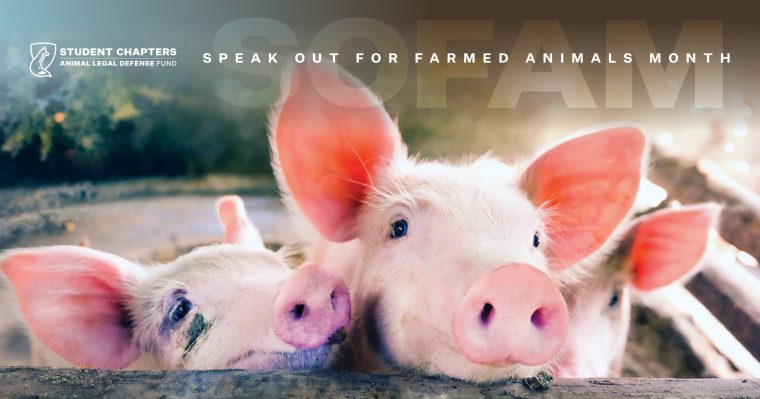
This SALDF Chapter Project Kit contains activity suggestions, resources, ideas, and action items — everything needed to make planning and executing SOFAM events with ease (and fun!)
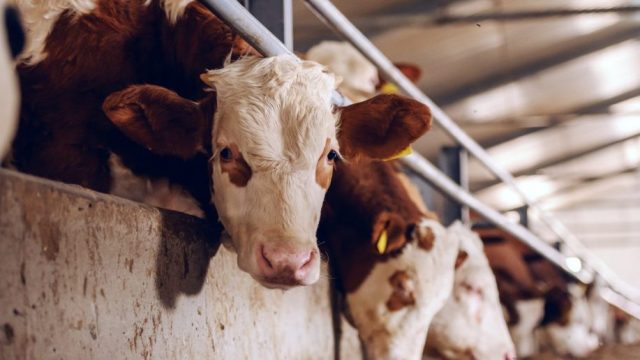
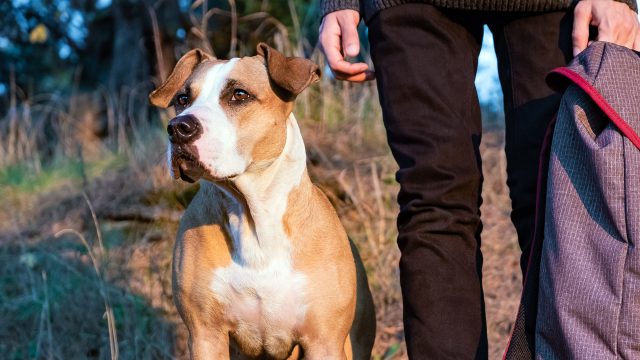
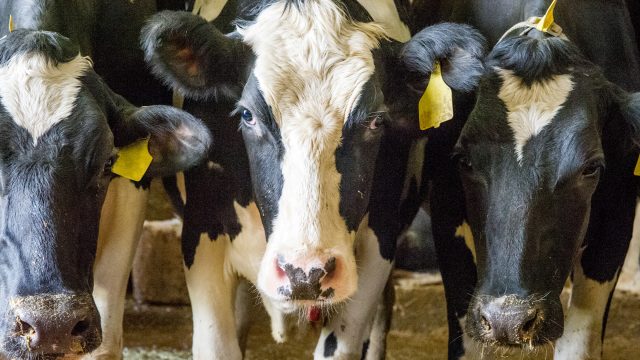
Farmed animals are among the most exploited animals in industries and private use across the country yet are the least protected when it comes to the laws that impact their lives and wellbeing. We encourage students to think critically about these industries, uses, and what constitutes a farmed animal. Under federal law, farmed animals are considered “livestock” and defined as “…cattle, sheep, horses, goats, and other domestic animals ordinarily raised or used on the farm…”[i] but how do you define a farmed animal? Chickens and turkeys, for example, are not included in the federal definition but are routinely raised, tortured, and slaughtered for food; both wild-caught and farmed fish are part of these industries, without protection; dogs are bred and raised for profit in puppy mills that resemble that of factory farms; mink and foxes are bred, raised, and killed for their fur in farmed conditions.
Speak Out for Farmed Animals Month is an opportunity to consider who we are speaking about when we discuss farmed animals, the challenges we face in protecting them — legally, socially, and economically — and possible solutions moving forward.
We would love to hear about the amazing work your chapter accomplishes during Speak Out for Farmed Animals Month! While this project kit offers suggested events and opportunities, it is not an exhaustive list. If your chapter is doing something not featured, please let us know your great ideas by sharing on your chapter’s social media channels.
Below, you will find suggested events and action items for your student chapter to participate in, along with any relevant materials or additional information that is needed.
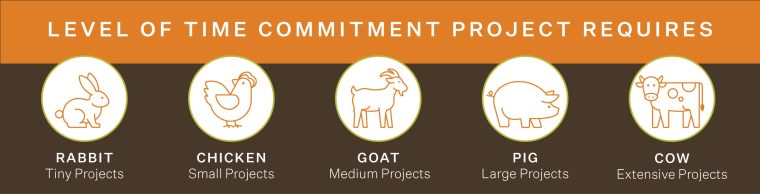
PROJECT IDEAS
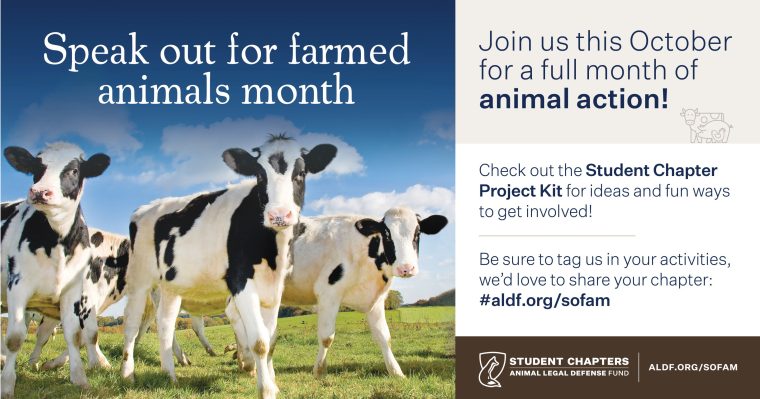
SALDF Chapters may apply for project grants to help cover costs. Grants can cover plant-based food and more! Funding is on a rolling basis.
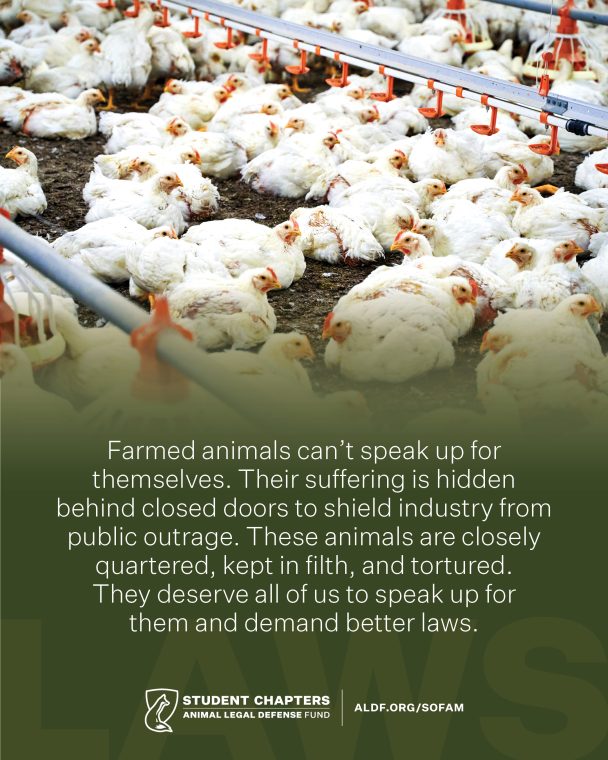
In early 2026, the U.S. Department of Agriculture (USDA) proposed to further deregulate farmed animal slaughterhouses by allowing them to operate their slaughter lines at even more dangerously high speeds. The speed at which these facilities stun, kill, and butcher animals has a direct impact on animal welfare, food safety, public health, worker safety, and pollution.
The USDA sets maximum line speeds for slaughterhouses by regulation. But for decades it has, in response to industry pressure, allowed faster and faster line speeds. The newest USDA proposed rules would cut even more corners by raising the maximum line speed for chicken and turkey slaughterhouses even further and eliminating line speed regulation in pig slaughterhouses altogether.
If finalized, the USDA’s proposed rules would further increase animal suffering and slaughterhouse pollution while also further imperiling consumers, communities, and workers.
On behalf of SOFAM 2026, we invite SALDF chapters and members to raise awareness about life and death on factory farms and in slaughterhouses. Consider what line speed increases mean for animals, workers, consumers, communities, and the environment. ALDF has resources on this issue, along with guidance on how to contact your representatives, talking points, and petition sharing.
As a chapter or as an individual, your voice matters! If your chapter is interested in a more advanced project, including setting up in-person meetings or participating in letter campaigns, reach out to Priscilla directly at prader@aldf.org.
- Opposing USDA’s Dangerous Plan to Increase Slaughterhouse Line Speeds
- ALDF coalition letter in response to Food Safety Inspection Service poultry line speed proposed rule, FSIS–2025–0012
- ALDF coalition letter in response to Food Safety Inspection Service pig line speed proposed rule, FSIS-2025-0009
- “Urge USDA to Stop Its Plans to Increase Slaughterhouse Line Speeds”
- “The USDA Wants to Increase Slaughterhouse Line Speeds, Despite the Risks”
- ALDF Farmed Animals Page
- Senator Cory Booker (D-NJ) and Rep. Ro Khanna (D-CA) co-led letter to FSIS urging the agency to reject both line-speed proposals
- How to contact your elected officials
Related Farmed Animal Actions:





Join the Animal Legal Defense Fund as a Student Member
Become a member of the Animal Legal Defense Fund and receive benefits and additional opportunities.
How We Work
Related
-
Groups File Opening Briefs in LCFS Biogas Lawsuit
ALDF, as part of a coalition, filed an opening brief in a case to force California’s Air Resources Board to reform its Low Carbon Fuel Standard.September 29, 2026 Press Release -
Cascade County, Montana, Selected for Animal Cruelty Response and Prevention Program
The launch of the program includes a community survey to help the program address animal cruelty and support abuse prevention in Cascade CountySeptember 15, 2026 Press Release -
Clean Water Advocates File Lawsuit Over Oregon Factory Farm General Permit
A coalition of public interest organizations filed a lawsuit challenging the Oregon Departments of Agriculture and Environmental Quality’s new factory farm general permit.July 14, 2026 Press Release