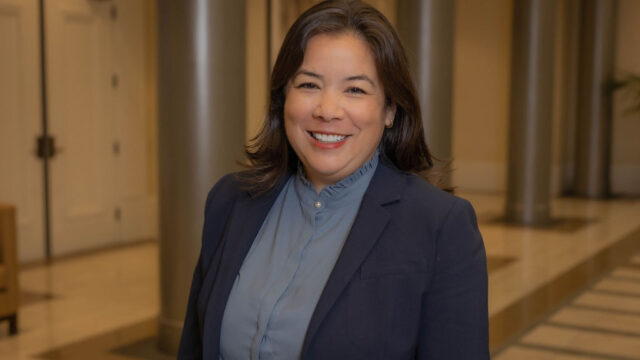
Spotlight: Barbie Dolorit
Barbie Dolorit is a 2026 recipient of the Animal Legal Defense Fund’s Advancement in Animal Law Scholarship.
What Animal Legal Defense Fund student chapter activities are you proudest of and why?
Taking our SALDF members to Rosie’s Animal Sanctuary was an incredible experience. We wanted to bring the abstract concept of animal rights and protection into something tangible, enabling students to connect with the mission on a more personal level. Members got to meet cows, sheep, goats, ducks, chickens, various types of pigs, turkeys, and horses, all with their own story of how they came to live at Rosie’s. Sanctuary staff explained how numerous animals had come from situations tied to industrial agriculture, neglect, abandonment, or exploitation within the agribusiness system.
What made the experience especially meaningful was seeing students begin to understand animals as individual beings with distinct personalities, preferences, and histories. Many of our members had never interacted closely with farmed animals before, and that experience challenged assumptions they did not even realize they held. Students began to recognize the disconnect between how society views companion and farmed animals, despite their similar emotional intelligence and capacity to suffer. The trip sparked thoughtful conversations about the role of law in either reinforcing or challenging systems of exploitation, and it reminded us that animal law is ultimately about real individuals whose lives are shaped by the policies, industries, and legal frameworks we study. It also strengthened our chapter community by grounding our advocacy in empathy, curiosity, and a deeper understanding of why this work matters.
Any other noteworthy experience?
Our SALDF chapter co-hosted a “State of the Union: Animal Law” event with the D.C. Bar Animal Law Subcommittee, bringing real practitioners together to discuss the state of animal law under this administration. I had the honor of moderating the panelists, which included Drew Robertson from Humane World Action Fund, Jon McCord from Physicians Committee for Responsible Medicine, and Jason Rylander from the Center for Biological Diversity. My first event, “Puppies and Pizza,” had students bond over their dogs and vegan pizza as Ralph Henry from Humane World for Animals discussed the possibilities of incorporating animal law into any legal career.
The last notable mention is our bi-weekly newsletter, which includes a Take Action Today section with concrete advocacy steps, such as signing petitions; an Animal Law Opportunities section highlighting things like upcoming animal law symposiums; updates on events happening across the DMV; and a SALDF Recommends section, where I have featured resources such as The Animal Law Podcast and books and films with pro-animal themes. It was such a wonderful surprise to see SALDF members at a Good Food Institute’s Book Talk Event, which I advertised in our newsletter.
What is an animal law related goal of yours for the upcoming academic year?
One of my primary animal law goals for the upcoming academic year is to continue developing and publishing my research on the Endangered Species Act’s Habitat Conservation Plan (HCP) process. Under Section 10 of the ESA, private entities can obtain Incidental Take Permits that allow them to take protected species if they develop an HCP describing how they will minimize and mitigate the impacts. Although the process is intended to balance development and conservation, my research examines how the current framework often prioritizes regulatory certainty and economic interests over the long-term flourishing of endangered species and ecosystems.
My work focuses specifically on critiquing standards such as the requirement that impacts be minimized and mitigated “to the maximum extent practicable” and the “No Surprises” policy, which can limit the government’s ability to require additional conservation measures even when ecological conditions worsen over time. I am exploring ways the framework could be reimagined to better center ecological integrity and the interests of affected species themselves, including drawing analogies to concepts in disability law and environmental governance.
Over the next academic year, I hope to refine this research into a publishable piece and submit it to animal law journals and conferences. More broadly, I want to contribute to conversations about how animal law can move beyond reactive protection and toward legal structures that affirm the belonging and long-term well-being of nonhuman animals within shared ecosystems.
What are your plans/goals for post-graduation?
My long-term goal after graduation is to do impact litigation at a nonprofit focused on protecting animals across contexts, including wild animals, captive animals, animals used in agriculture and research, and animals exploited by the fashion industry. I am especially drawn to trial work and oral advocacy because I think storytelling is the most powerful tool a lawyer has. I want to help courts and decision-makers see animals as living beings with inherent value independent from their utility to humans.
At the same time, I am deeply interested in the ways animal exploitation is intertwined with harm to human communities. The same systems that exploit animals also harm immigrants, incarcerated workers, low-income communities, and Black, Indigenous, and other marginalized communities through dangerous labor conditions, environmental burdens, and other forms of structural exploitation. I want my career to reflect that these injustices are systemic and connected, and to use litigation to challenge the broader systems that profit from them.
In the longer term, I hope to incorporate regulatory advocacy for plant-based alternatives and cultivated meat to build a food system that is more humane, sustainable, and just for animals and humans alike.
What is one piece of advice that you’d like to pass on to other Animal Legal Defense Fund student chapter leaders?
One piece of advice I would pass on to other ALDF student chapter leaders is to remember that people get involved through different doors. Some students are passionate about companion animals; some care most about wildlife; some are interested in food systems or environmental justice; and others are drawn to criminal law, constitutional law, or public health. A strong chapter makes room for all of those entry points rather than treating animal law as narrow or one-dimensional.
I have found that the best way to build lasting engagement is to meet people where they are and then help them see the bigger picture. When students feel that their own interests and values have a place in the chapter, they are much more likely to stay involved, take initiative, and grow into thoughtful advocates.
Learn more about the other 2026 Advancement in Animal Law Scholarship winners.

How We Work
Recent News
-
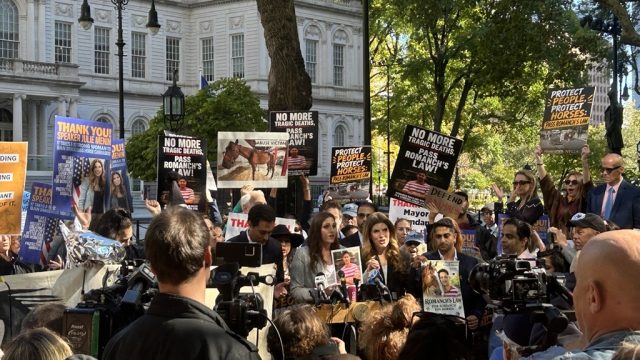
NYC Council Passes Romanch’s Law in Historic Vote to End Horse-Drawn Carriages by 2028
The bill will responsibly phase out the horse drawn cab industry to make NYC safer for allOctober 22, 2026 Press Release -
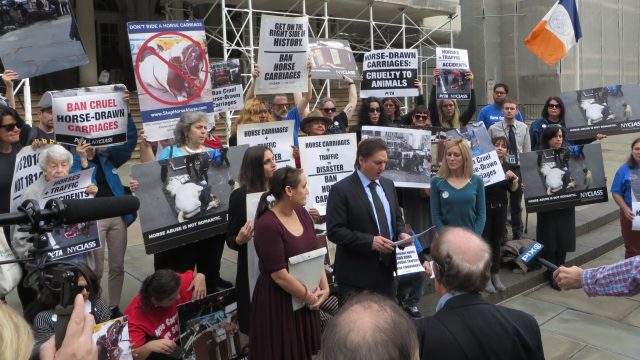
New York City’s Horse Carriage Ban – 20+ Years in the Making
The landmark passage of New York City’s horse carriage ban is an incredible victory for animal protection and public safety. It’s also a reminder that important legislation is worth the fight. -
ALDF Announces Caitlin Hawks as New Executive Director
The Animal Legal Defense Fund today announced Caitlin Hawks as its new executive director.October 21, 2026 Press Release
Donate to Protect Animals
Help animals win the legal protections they so desperately need and deserve, and ensure they have an advocate in courtrooms and legislatures across the country.