From Peril to Sanctuary: Toby the Chimpanzee’s Story
It was late in the afternoon on the Friday before a long holiday weekend when Brittany Peet, the Animal Legal Defense Fund’s Transparency and Regulatory Affairs program director, received a fateful call.
The caller had troubling news about a chimpanzee named Toby.
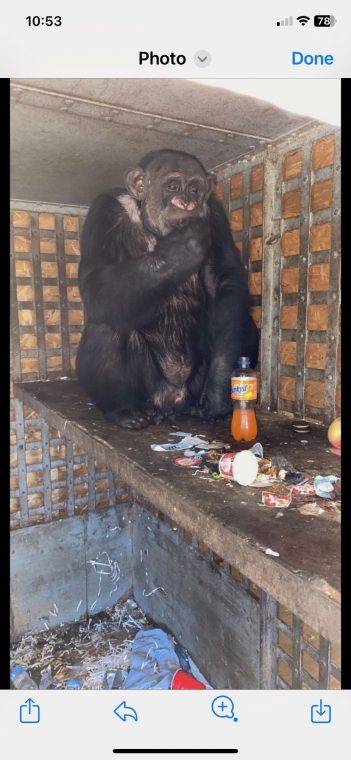
Toby, a 32-year-old chimpanzee who’d spent almost his entire life being kept as a wild “pet” in the garage of a rural Indiana home, was in danger — and every moment counted.
Peet’s contact had received a tip from a concerned member of the public, who reported that Toby’s “owner” had died and left instructions that Toby be shot and killed upon the owner’s death, rather than moving him elsewhere. According to the tipster, the owner’s family intended to carry out this wish.
A Rescue Mission
Peet, an attorney with a specialty in protecting captive wild animals, leapt into action. She knew that the federal Endangered Species Act (ESA) protects chimpanzees like Toby, whether they are in the wild or in captivity — but that protection depends on humans to uphold it. The ESA, among other protections, outlaws the killing of protected species such as chimpanzees without a permit, which would not have been granted in this situation.
Peet immediately set to work writing an official complaint about Toby’s case and sending it to a senior official at the U.S. Fish and Wildlife Service (FWS), one of the federal agencies responsible for enforcing the ESA.
But knowing time was of the essence, and Toby’s safety was at risk, Peet didn’t stop there. If the FWS official didn’t see the complaint until after the long weekend, it might be too late. Peet next reached out to another contact who works closely with FWS on wildlife-trafficking issues. As it turned out, both this contact and the FWS official were already in transit to holiday-weekend travel plans — but both stopped what they were doing to help Toby.
An Indiana-based FWS agent was urgently dispatched to the property where Toby lived, and was there within hours of the complaint being issued, providing notification that it would be a federal crime to kill Toby and receiving assurances that he would not be killed.
Toby’s Fresh Start
The next order of business was finding a suitable new home for Toby. Peet contacted the Center for Great Apes, a Florida-based Global Federation of Animal Sanctuaries-accredited sanctuary with significant expertise in rehabilitating chimpanzees rescued from the “pet” trade and private homes, which generously opened its doors to Toby.
With the help of our supporters, the Animal Legal Defense Fund funded Toby’s transport from Indiana to Florida, including the services of expert veterinarians who traveled with Toby to ensure his safety during the trip.
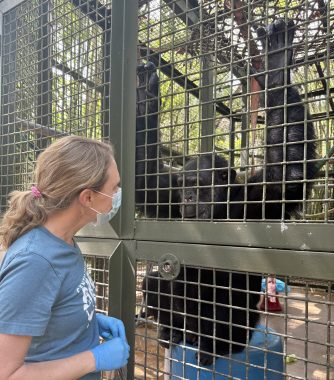
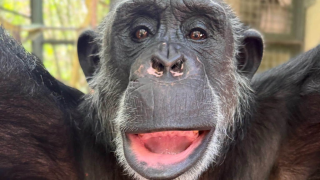
Toby at the Center for Great Apes. (Note that these images were taken shortly after Toby's arrival at the sanctuary and depict a temporary quarantine enclosure.)
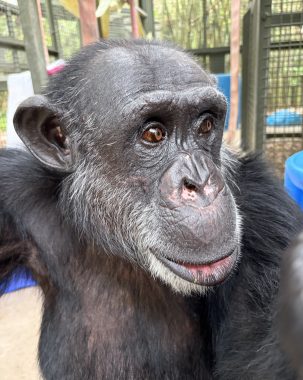
Toby at the Center for Great Apes. (Note that these images were taken shortly after Toby's arrival at the sanctuary and depict a temporary quarantine enclosure.)
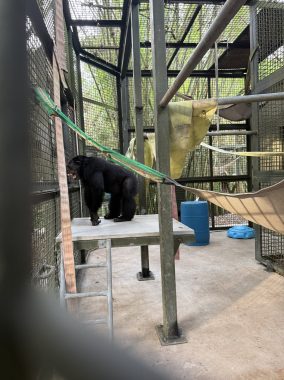
Toby at the Center for Great Apes. (Note that these images were taken shortly after Toby's arrival at the sanctuary and depict a temporary quarantine enclosure.)
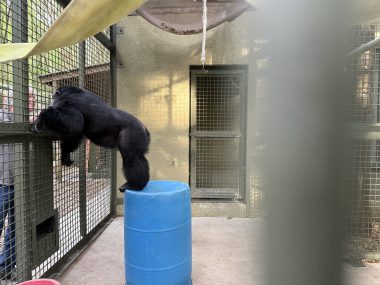
Toby at the Center for Great Apes. (Note that these images were taken shortly after Toby's arrival at the sanctuary and depict a temporary quarantine enclosure.)
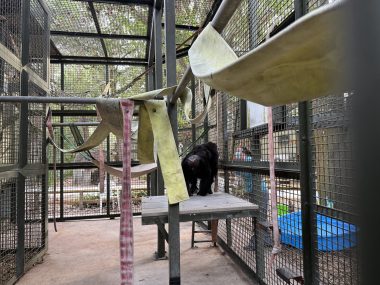
Toby at the Center for Great Apes. (Note that these images were taken shortly after Toby's arrival at the sanctuary and depict a temporary quarantine enclosure.)
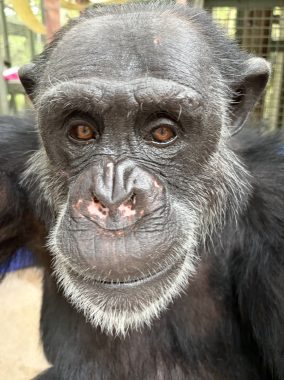
Toby at the Center for Great Apes. (Note that these images were taken shortly after Toby's arrival at the sanctuary and depict a temporary quarantine enclosure.)
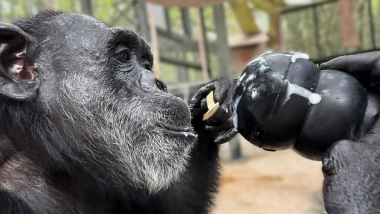
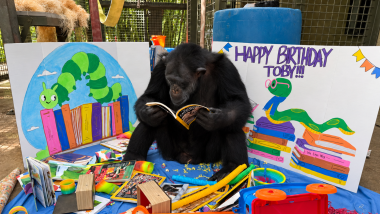
The Center for Great Apes reports that Toby has been settling in well to his new home. Curious and playful, he’s been excited to engage with his new caregivers and is enjoying new toys, enrichment items, soft blankets, and the chance to make his own decisions and have some agency over his own life and how he spends his days — likely for the first time in his life.
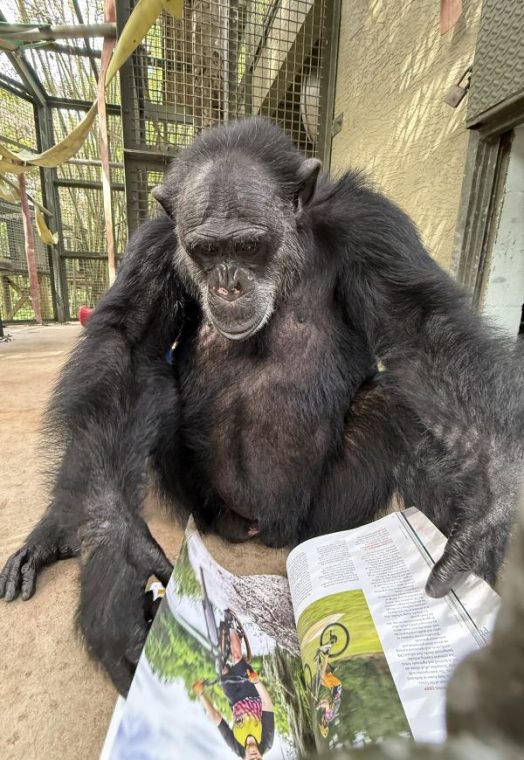
One choice he’s made so far: Sleeping outside on a warm Florida night, in a nest he made himself from those new blankets. (The next evening, it rained, and Toby wisely decided to collect his blankets and move them back inside for the night.)
While Toby is currently staying in a temporary enclosure during a quarantine period — a safety measure taken with every new sanctuary resident in order to protect all the primates living there — he has been able to see and hear other chimpanzees for the first time in more than three decades. Caretakers have observed Toby quietly watching another chimpanzee housed nearby and intently listening to the long calls of orangutans from across the sanctuary grounds.
When the quarantine period is complete, he’ll begin the process of integrating with other chimpanzees at the Center for Great Apes — perhaps even having the chance to meet some of his siblings who already called the sanctuary home. (Toby’s father, Joe, also lived at the sanctuary until his passing last year. Joe was captured from the wild and had been transferred between a number of different facilities in his life, eventually arriving at one owned by “Joe Exotic” of Tiger King infamy, before ultimately finding sanctuary. At the Center for Great Apes, Joe’s friend group included Angel, a chimpanzee who was rescued from a cruel animal trainer in the entertainment industry through an Animal Legal Defense Fund lawsuit more than 20 years ago. Angel is still living happily at the Center for Great Apes.)
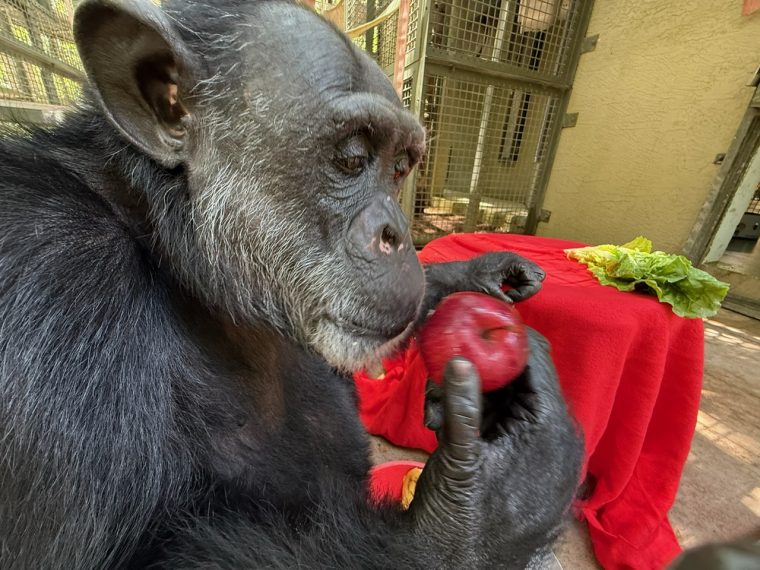
Another positive change for Toby: Adjusting to a new, species-appropriate diet. Previously, he’d reportedly been fed a diet that consisted largely of pizza, burritos, and Mountain Dew.
A Cruel Industry Nears Its End
Chimpanzees and other nonhuman primates suffer greatly when kept as “pets” or used for entertainment. Toby was born at an Oklahoma roadside zoo and was just an infant when he was taken away from his mother to be sold as a “pet” — a life that chimpanzees are emphatically not suited for. In order to sell wild animals in the pet trade, breeders typically separate them from their mothers very prematurely. In the wild, a young chimpanzee would remain with their mother for years in a socially complex family group. Instead, Toby was deprived of seeing another member of his own species for almost his entire life — one of the most severe forms of psychological torment that a primate can suffer.
During the more than three decades Toby spent in rural Indiana, he was denied the opportunity to engage in the behaviors that come naturally to chimpanzees, such as swinging, climbing, and roaming (in the wild, they might travel multiple miles per day). It is believed that he experienced little to no veterinary care during these years. While multiple sanctuaries and accredited zoos had reached out with offers to provide Toby a better life, none was ever accepted by his late owner.
Countless chimpanzees and other primates have been forced into an unnatural and inhumane life of captivity as personal “pets.” All too often, this has ended in tragedy for the chimpanzee, and for the humans around them as well. Many will remember the story of Travis — a chimpanzee who, like so many others sold into the pet trade, was raised similarly to a human child, but as he aged became much too strong and, predictably, exhibited too many wild tendencies for his human family to handle. In Travis’s case, this ultimately led to him attacking a friend of his “owner,” being stabbed by the woman who had once raised him as her child, and finally being fatally shot by a police officer.
Fortunately, Toby is believed to be one of the last chimpanzees to live in a private home (or in his case, garage) in the U.S. But it’s believed that thousands of other primates are being kept as “pets” in homes that cannot possibly meet their complex social, emotional, and physical needs. And alarmingly, a recent report found a marked increase in primate sales conducted on social media, with over 1,600 primates being found offered for sale across just four social platforms during a six-week period in 2025.
You Can Help
So many people needed to come together for Toby’s story to end happily. From the concerned member of the public who first raised the alarm, to the sanctuary operators and staffers who made Toby’s rescue possible, to the animal protection experts, advocates, and government officials who ensured his safe release, Toby’s story is one of collaboration — and the need to protect other primates like him continues.
ALDF is fighting to protect chimpanzees and other primates from the cruel pet trade, approaching the issue from multiple angles including regulatory work and legislation.
Your voice is needed: Congress is considering a bill called the Captive Primate Safety Act that would ban the private ownership of apes and monkeys throughout the U.S. Federal legislation like this is important, because without it, the animals (and public safety) rely on an inadequate patchwork of state and local laws that vary wildly by jurisdiction.
The Captive Primate Safety Act would not only protect all nonhuman primates like Toby from living in inhumane and dangerous conditions in private homes, but would also ban the interstate and foreign commerce in these vulnerable animals for the pet trade — a key enforcement mechanism.
Two-minute action: Send a message urging your federal lawmakers to support the Captive Primate Safety Act! And if you’re not already receiving updates from the Animal Legal Defense Fund, join our email list or follow us on social media to find more opportunities to take action for primates and other animals.
Focus Area
Related
-
Imperiled White Lions Rescued from Texas Roadside Zoo to Receive Medical Care
The Animal Legal Defense Fund urged federal authorities to investigate the plight of two white lions who were apparently enduring severe physical and neurological distressMay 7, 2026 News -
Animals Begin New Lives at Sanctuaries After Rescue from Pennsylvania Roadside Zoo
The settlement agreement involves relocating 45 captive animals from a bleak roadside zoo to peaceful sanctuary homes over a five-year periodDecember 19, 2024 News -
NYC Council Passes Romanch’s Law in Historic Vote to End Horse-Drawn Carriages by 2028
The bill will responsibly phase out the horse drawn cab industry to make NYC safer for allOctober 22, 2026 Press Release