
Roadside Zoos
Small, unaccredited zoos where wild and exotic animals suffer in captivity
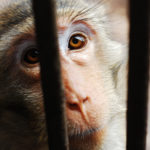
Roadside zoos dot the American landscape. They’re generally small menageries where wild animals such as lions, tigers, monkeys, wolves, and others are kept in captivity, and often suffer badly.
The animals frequently live in small, dirty cages. They are fed inadequate food, and are denied medical care. They have little in the way of mental stimulation — often, not even the company of other animals, since many roadside zoos keep animals confined alone in their cages. Sometimes roadside zoos also encourage dangerous interactions between animals and visitors, such as bottle-feeding bear cubs.
These facilities continue to operate due to a patchwork of mostly lax state and federal laws, and lax enforcement of those laws. At the Animal Legal Defense Fund, we use all the legal tools at our disposal to secure more and better protections for animals at roadside zoos.
We secure new legal protections for animals held captive at roadside zoos: In 2018 the Animal Legal Defense Fund scored a major victory for endangered animals living in captivity at roadside zoos. A three-judge panel of the Eighth Circuit issued a unanimous decision upholding a district court’s 2016 ruling that Cricket Hollow Animal Park (formerly Cricket Hollow Zoo), a roadside zoo in Manchester, Iowa, violated the Endangered Species Act by providing substandard care for the four tigers and three lemurs who were the subject of the lawsuit.
This ruling was significant for Cricket Hollow’s animals, and set important precedent that we will use to help many more.
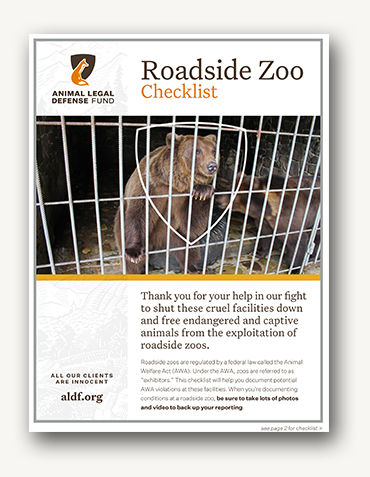
We secure better living conditions for animals held captive at roadside zoos: Our lawsuits often result in the owners of roadside zoos either being ordered to move their animals to sanctuaries, or choosing to do so voluntarily.
We fight for stronger laws, and better enforcement of existing laws: The Animal Welfare Act is the chief federal law that governs roadside zoos. The law itself, as well as its enforcement by the Department of Agriculture, are frequently criticized for allowing roadside zoo operators’ inhumane practices to go unchecked. State laws vary considerably, with some having such lax oversight that the states become known as havens for cruel roadside zoos.
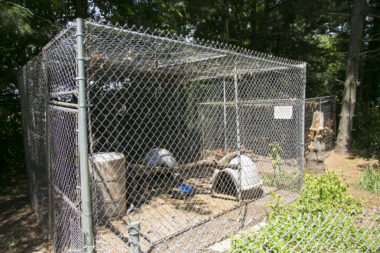
Deer Haven Mini Zoo in Keymar, Maryland
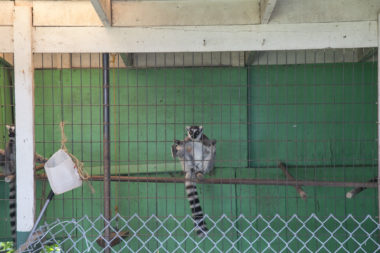
Deer Haven Mini Zoo in Keymar, Maryland
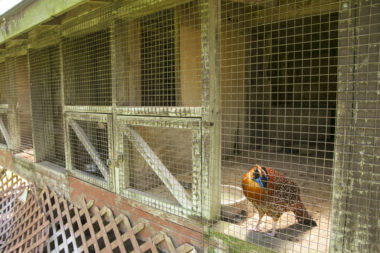
Deer Haven Mini Zoo in Keymar, Maryland
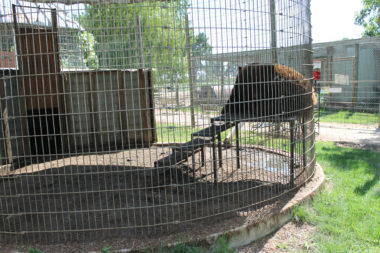
Cricket Hollow Zoo in Manchester, Iowa
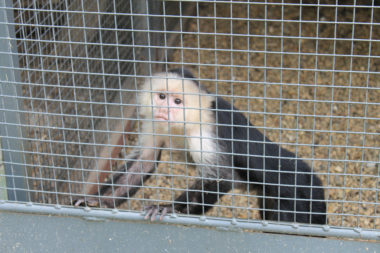
Cricket Hollow Zoo in Manchester, Iowa
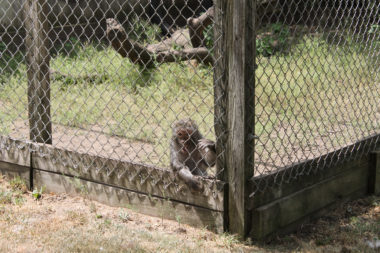
Cricket Hollow Zoo in Manchester, Iowa
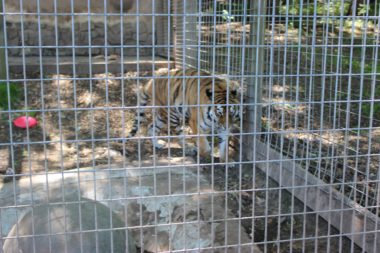
Animaland in Pennsylvania
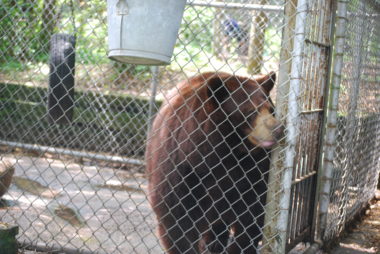
Animaland in Pennsylvania
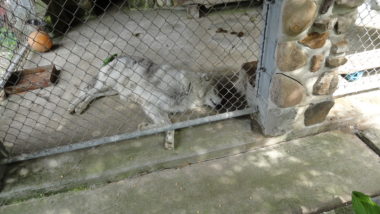
Animaland in Pennsylvania
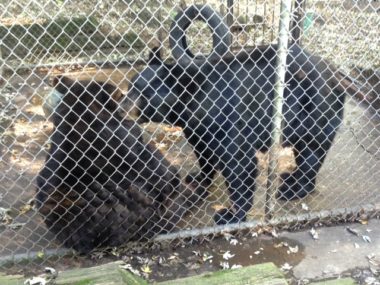
Animaland in Pennsylvania
Captive animals need better laws, and better enforcement of those laws. Our legislative affairs team advocates for stronger state and federal laws. And we are also using the regulatory process to advocate for stronger protections under existing laws.
Related News

-
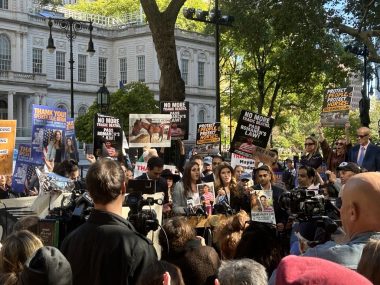
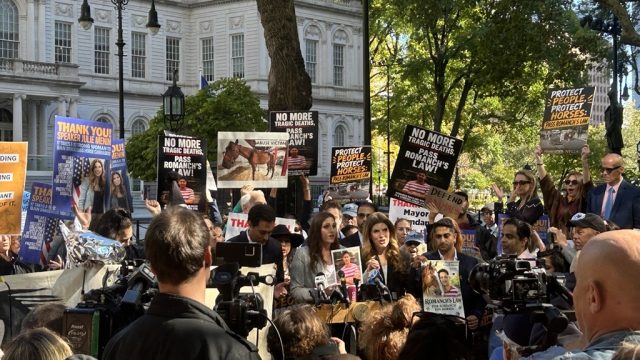
NYC Council Passes Romanch’s Law in Historic Vote to End Horse-Drawn Carriages by 2028
The bill will responsibly phase out the horse drawn cab industry to make NYC safer for allOctober 22, 2026 Press Release -
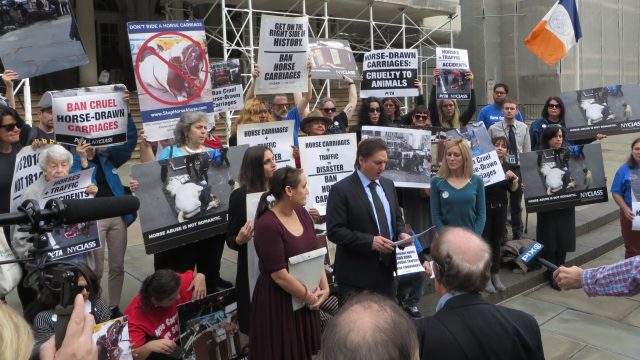
New York City’s Horse Carriage Ban – 20+ Years in the Making
The landmark passage of New York City’s horse carriage ban is an incredible victory for animal protection and public safety. It’s also a reminder that important legislation is worth the fight. -
ALDF Announces Caitlin Hawks as New Executive Director
The Animal Legal Defense Fund today announced Caitlin Hawks as its new executive director.October 21, 2026 Press Release

Related Cases
-
Complaint Urges Federal Officials to Confiscate the Last Remaining Solitary Pet Chimpanzee in U.S.
Submitted complaint to the USDA on October 20, 2026


Looking for case and legal resources? View Resources
See More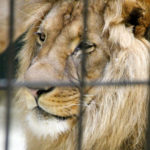
Say No to Roadside Zoos
Bears, lions, and other animals languish in roadside zoos across the country. Animals live in cruel conditions, confined to small cages without the enrichment they need to lead full, happy lives. Protect animals by boycotting roadside zoos.