Q&A: ALDF’s Brittany Peet Talks Primate Protection
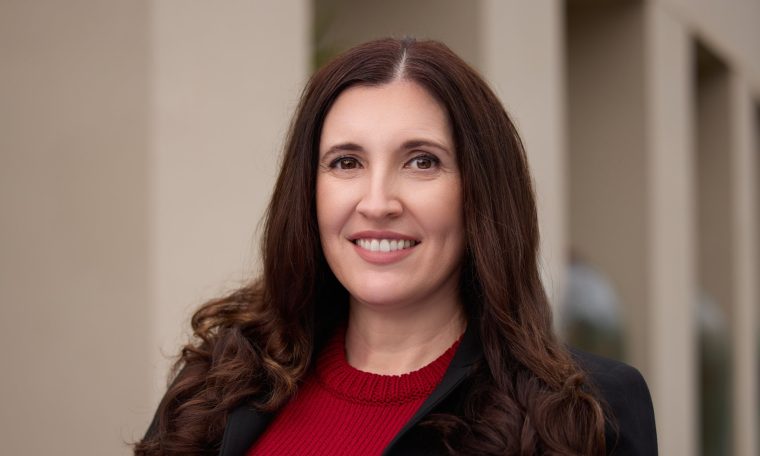 ALDF Transparency and Regulatory Affairs Program Director Brittany Peet has devoted her career to helping nonhuman primates and other wild creatures kept in inhumane captivity, such as ill-equipped human homes and cruel roadside zoos. (If she looks familiar, it might be that you recognize her from documentary series such as Tiger King and Chimp Crazy.)
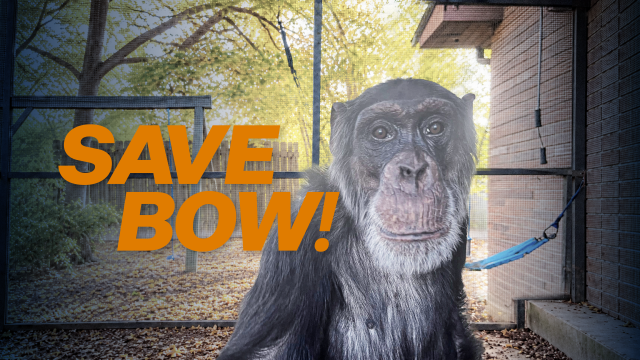
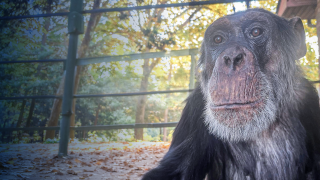
Peet spearheaded ALDF’s work to get Toby to sanctuary, and now leads our campaign to create a happier life for Bow. She shares her insights in a Q&A:
What do you think the average animal advocate might not know, but should, about primates kept as “pets”?
Peet: How many there are! We don’t have an exact number given the patchwork of laws around the country — some states don’t regulate the private possession of primates at all; this is why ALDF is fighting so hard to pass the Captive Primate Safety Act. But from paperwork that’s legally required to transport animals between states, it’s clear that there are thousands of primates being held as pets in human homes where none of their complex needs are being met.
Can you tell us about an animal you’ve met who helped shape the way you think about the issue of captive wild animals kept as “pets” and the trade in these animals?
Peet: There are so many. I wrote a piece discussing Buck, another chimpanzee whose story is eerily similar to Bow’s. It’s also hard not to think of Tonka, the chimpanzee whose story was told in the HBO docuseries Chimp Crazy. Tonka was taken from his mother as an infant to be exploited in the film & television industry, then dumped at a chimpanzee breeding mill. Finally, PETA secured a court order mandating his transfer to a sanctuary, and he was ultimately hidden away in a basement in Missouri all because of one woman’s disturbed belief that he could not live without her. Today, he’s thriving as a high-ranking member of a chimpanzee group at the Save the Chimps sanctuary, but his story is a great example of how human fascination with these magnificent animals can become twisted and result in severe cruelty to animals they claim to love.
What do Toby and other already-rescued chimpanzees show us about what life could be like for Bow?
Peet: It’s shocking and heartening to see how quickly so many chimpanzees adapt to their new lives in sanctuaries. When they first arrive, the expansive spaces, change in diet, and even enrichment items can be frightening to them after so many years in cramped, barren enclosures. But even chimpanzees like Toby, who was held in solitary confinement for decades, slowly, and often with the help of their first chimpanzee friends, learn how to be chimpanzees.
What gives you hope for wild animals in the pet trade?
Peet: The successes that we have achieved for chimpanzees and big cats in the pet trade show that there is public support and political will to move the needle forward for even more wild animals in the pet trade. All of us will need to step up and lend our voices, but we will make it happen. First up, the Captive Primate Safety Act!
U.S. Residents: Urge your legislators to support the Captive Primate Safety Act!
Send your federal legislators a letter to urge them to co-sponsor the Captive Primate Safety Act.

Focus Area
Related
-
Group Seeks Federal Action to Protect the Last Remaining Solitary Pet Chimpanzee in the U.S.
Bow, an endangered chimpanzee, is being held in solitary confinement in violation of federal lawOctober 20, 2026 Press Release -
Groups File Opening Briefs in LCFS Biogas Lawsuit
ALDF, as part of a coalition, filed an opening brief in a case to force California’s Air Resources Board to reform its Low Carbon Fuel Standard.September 29, 2026 Press Release -
Cascade County, Montana, Selected for Animal Cruelty Response and Prevention Program
The launch of the program includes a community survey to help the program address animal cruelty and support abuse prevention in Cascade CountySeptember 15, 2026 Press Release