The Long Fight Behind Efforts to Save Bow, the Last Solitary Pet Chimpanzee
I found out that Buck was dead from a Google alert.
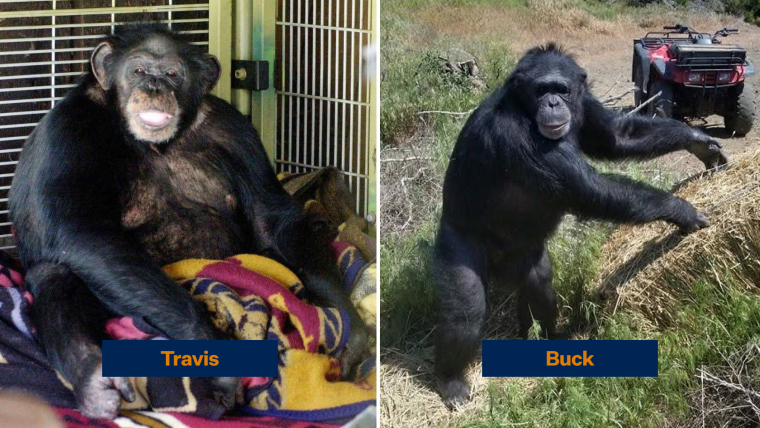
For nearly 20 years, I’ve worked to end the solitary confinement of chimpanzees. This work has resulted in the rescue of dozens, including most of the surviving solitary chimpanzees who were held in roadside zoos and the pet trade. My colleagues and I meticulously tracked these individuals and noticed red flags with the Oregon state permit that allowed Buck’s “owner,” Tamara Brogoitti, to continue keeping Buck as a “pet” after Oregon banned the private possession of exotic animals. We alerted state authorities to the permit violations, which gave the agency grounds to move Buck to an accredited chimpanzee sanctuary. They didn’t. Instead, one day Buck attacked Tamara’s daughter, and he was shot in the head by police. I found out as I was checking my Google alerts the next morning.
This outcome was predictable, and we warned Oregon authorities that it would happen if they failed to act.
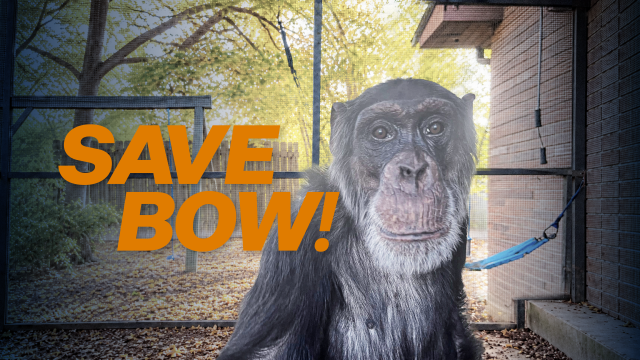
Today, there is one chimpanzee left in this life-threatening position in the United States: a 24-year-old chimpanzee named Bow living in a home in Missouri. He is the last chimpanzee held in solitary confinement as a pet in this country and he’s running out of time.
Chimpanzees kept as pets are taken from their mothers when they’re just days old and sold for $50,000 or more. Many owners see these apes as their children and treat them as such, dressing them in clothes and allowing them to play with human children. That all changes when they become teenagers. Chimpanzees are incredibly strong, and they instinctively react violently to perceived threats with a force no human or household is built to withstand. Chimpanzees are not domesticated; they become unpredictable and dangerous when they reach sexual maturity at around 15 years old. That’s typically when they’re locked away in a cage and excluded from family life. The best-case scenario is that they’re surrendered to a sanctuary when the owners realize they’ve made a horrible mistake. The worst, as has happened again and again, is a bullet in their head.
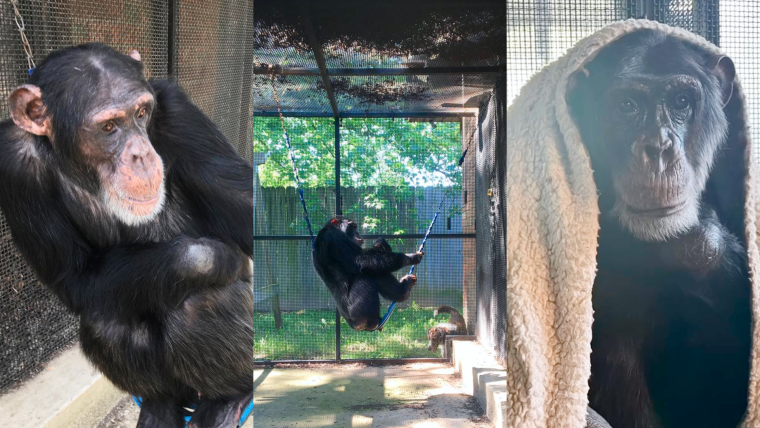
Bow has been denied access to other chimpanzees, which amounts to psychological torture for this highly social species, for nearly his entire life. His owner, Aya Katz, claims to be conducting language research with Bow, the legitimacy of which is belied by her lack of academic affiliation and the fact that she monetizes Bow through her YouTube channel. The channel contains hundreds of videos of Bow grooming Katz, a natural, necessary chimpanzee behavior that he’s only able to perform on her schedule, and for which she receives attention and compensation online, including via private, members-only videos for which access can cost up to $49.99 per month.
Under the federal Animal Welfare Act (AWA), exhibition of animals like chimpanzees requires a license from the U.S. Department of Agriculture (USDA). Katz doesn’t have one. PETA, where I previously worked, submitted complaints over this unlicensed exhibition, and the agency issued her a citation for this conduct in 2023. In numerous complaints and in-person meetings with high-ranking USDA officials in charge of AWA enforcement since then, PETA has alerted officials to Katz’s near-daily illegal exhibition of Bow. We warned of the inevitability that Bow, like Buck, Travis (a chimpanzee who famously mauled a family friend in Connecticut in 2009) and so many chimpanzees sentenced to the pet trade before him, will attack, escape, injure or kill humans, and pay with his life. Despite these dire warnings, the USDA continues to allow Katz to profit by thumbing her nose at federal law and has done nothing to protect Bow.
Chimpanzees have long been listed as endangered under the federal Endangered Species Act (ESA), but for decades, a split-listing exempted captive chimpanzees like Bow from that protection, allowing the very abuses the ESA was designed to prevent. ALDF, Jane Goodall, and others fought to close that loophole, and in 2015, captive chimpanzees were granted full protection as well. Today, the ESA protects endangered species like Bow from harm and harassment, and case law victories secured by ALDF and PETA make clear that the ESA bars the solitary confinement of social species and requires appropriate conditions and environmental enrichment. Bow is denied all of this in the concrete-floored cell that is his home, but the U.S. Fish & Wildlife Service has done nothing to help him despite the ESA protections to which he is entitled.
After Buck’s death, I felt an obligation to watch the police body camera footage of his killing to bear witness and try to understand what he went through in his final moments. I watched the videos of Travis’s killing too. In the HBO docuseries Chimp Crazy, the officer who fired those fatal shots said that when Travis faced him, he heard Travis in his mind saying, “Please do it. I can’t take it anymore.” Did that happen or was it a fiction his brain created to reckon with the awful thing he had to do? Either way, I understand that impulse. Seventeen years into this work, I’ve had to learn how to compartmentalize the horrors animals face from human hands. I still wept when I watched the footage of Buck’s killing, knowing the moment was coming and then hearing the pop, and my voice broke when I described how senseless his death was in an interview for Chimp Crazy.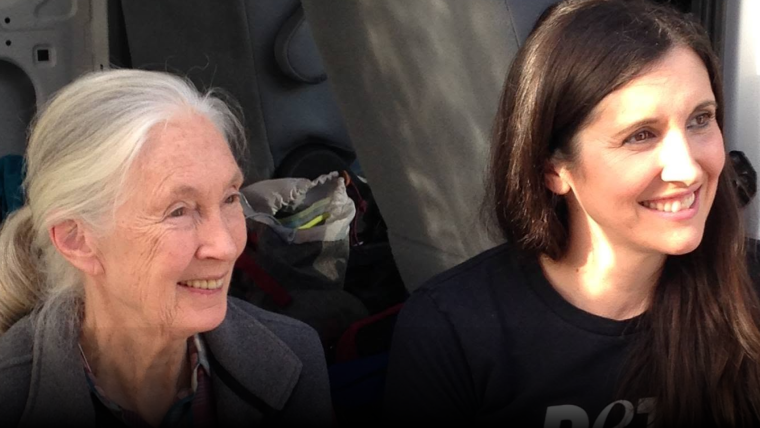
My colleagues and I are doing everything we can to ensure there is never another of these videos and that no other first responders are faced with that awful task.
About a year ago, I accepted a new position with the ALDF and that goal of ending the solitary confinement of chimpanzees followed me here. With Bow, we have an opportunity to move past this decades-old industry in which devoted chimpanzee mothers, who nurture their babies into their teens in the wild, repeatedly had their infants snatched from their arms. Some tore apart their enclosures for weeks looking for their stolen babies. Those babies were shipped off to face their own version of this, often in homes much like Bow’s.
We’ve ended the use of chimpanzees in biomedical research and in films, television, and advertising. Bow can be the end of the pet trade, but only if federal authorities act before his story ends the way Buck’s and Travis’s did.
Please join me in urging your members of Congress to push federal authorities to enforce the law and secure Bow’s safe transfer to an accredited sanctuary where he will set eyes on others like him for the first time in decades and be surrounded by others who speak his language.
-
Brittany Peet
Transparency and Regulatory Affairs Program Director


Related
-
Group Seeks Federal Action to Protect the Last Remaining Solitary Pet Chimpanzee in the U.S.
Bow, an endangered chimpanzee, is being held in solitary confinement in violation of federal lawOctober 20, 2026 Press Release -
Groups File Opening Briefs in LCFS Biogas Lawsuit
ALDF, as part of a coalition, filed an opening brief in a case to force California’s Air Resources Board to reform its Low Carbon Fuel Standard.September 29, 2026 Press Release -
Cascade County, Montana, Selected for Animal Cruelty Response and Prevention Program
The launch of the program includes a community survey to help the program address animal cruelty and support abuse prevention in Cascade CountySeptember 15, 2026 Press Release