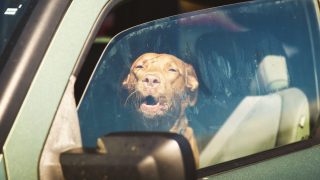
Rescue of animals from unattended vehicles
2025 U.S. Animal Protection Laws State Rankings
Rescue of Animals from Unattended Vehicles
A new trend in 2025 was the enactment of laws which allow law enforcement or civilians to intervene and rescue animals in imminent danger from unattended vehicles if certain criteria are met. Both Washington and Nevada enacted such laws in 2025.
The most common scenario in which these laws are employed are when dogs are left unattended in vehicles on warm days, causing the dog to suffer hyperthermia. On warm or hot days, temperatures inside a car can rise to lethal levels in a matter of minutes. While humans cool themselves by relying on an extensive system of sweat glands and evaporation, dogs and other animals have a harder time staying cool, leaving them extremely vulnerable to heatstroke. When an animal is suffering from heatstroke, every minute counts.
The first law permitting civilians to rescue animals from unattended vehicles was enacted in 2015 by Tennessee, and was quickly followed by a steady stream of similar laws throughout the United States over the next three years. However, since 2018 there has been little to no movement in these types of laws – until 2025 when both Nevada and Washington enacted good Samaritan laws. As of December 2025, there are now 16 states which allow civilians to rescue certain species of animals from unattended vehicles if various criteria are met. That criteria varies from state to state, so it is important for any potential rescuers to first consult their state’s statute. Generally speaking, good Samaritan laws typically permit companion or domestic animals if: 1) the animal’s life or health is in imminent danger, 2) the rescuer first attempts to locate the vehicle’s owner, 3) the rescuer first contacts law enforcement before attempting to rescue the animal, 4) the rescuer uses no more force than is necessary to gain access to the vehicle, and 5) the rescuer remains with the animal at a safe, nearby location until law enforcement or first responders arrive.
“In jurisdictions without emergency rescue and relief laws, people who see an animal in harm’s way face an excruciating choice: watch the animal needlessly suffer and possibly die, or help the animal despite potentially exposing themselves to legal liability,” says Managing Attorney David Rosengard. “Emergency rescue and relief laws cut through this: sending a clear signal that the community has decided that, for example, preventing a dog from baking alive in a hot car is worth a broken window if that is what it takes to make the animal safe. Key to this is the recognition that animals, of course, have an interest in not experiencing the suffering that comes with being maltreated at human hands—and that this interest is one the law can and should consider.”


You Can Protect Animals
Since 1979, the Animal Legal Defense Fund has led the charge to win animals the legal protection they so desperately need—and deserve. Your generous gift will assure that we can continue to take on cases that advance the interests of animals.