OPPOSE: The Agricultural Act of 2026 (Senate Farm Bill) (Federal)
ALDF opposes the Senate Farm Bill due to provisions that are dangerous for animals and urges Congress to keep provisions that undermine states’ ability to pass animal protection laws out of the final Farm Bill.

The Animal Legal Defense Fund opposes this bill.
Sponsor: Senator John Boozman (R-AR)
Introduction Date: June 23, 2026
On June 23rd, 2026, Senator John Boozman (R-AR), Chairman of the Senate Agriculture Committee, released the text of the long-awaited Senate Farm Bill, entitled the Agricultural Act of 2026 (bill number forthcoming).
After significant opposition from stakeholders across the country, the bill does not include the harmful “Save Our Bacon Act” language that would have nullified California’s Proposition 12, Massachusetts’ Question 3, and other important state animal protection laws. This is especially encouraging since the “Save Our Bacon Act” language was included in the House-passed version.
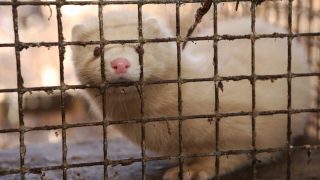
However, concerns remain. Like the House Farm Bill, the Senate bill would repeal a longstanding provision that currently prohibits federal funds from being used to support mink fur farming.
The Senate Agriculture Committee is expected to markup the legislation between July 13 and August 7, 2026. During the markup process, committee members may offer amendments to add, remove, or modify provisions in the bill. As a result, harmful language, like the Save Our Bacon Act, could still be included, and the mink fur farming provision could remain in the final committee-approved text unless it is successfully amended out.
The Farm Bill is a multiyear law that governs an array of agricultural, food, and conservation programs. It is typically renewed about every five or six years, and provides lawmakers an opportunity to address agricultural issues, including ones related to animal welfare.
The most recent Farm Bill was enacted into law in December 2018 to cover a five-year period. In November 2023, Congress enacted a one-year extension to cover the 2024 fiscal year and passed another one-year extension in December 2024 to cover the 2025 fiscal year. In 2025, Congress passed a reconciliation package — the One Big Beautiful Bill Act (H.R. 1) — which amended certain provisions of the 2018 Farm Bill, changed the authority of some mandatory spending programs, and authorized some programs through 2031. The House Farm Bill, formally known as the Farm, Food, and National Security Act of 2026 (H.R.7567), is what the House has referred to as a “skinny” Farm Bill addressing policy issues that were not included in H.R. 1.
Save Our Bacon Act:
As stated above, the Senate version of this bill does not include the harmful Save Our Bacon Act language that would have nullified California’s Proposition 12, Massachusetts’ Question 3, and other important state animal protection laws. However, this harmful language could still be included during the Senate markup and is currently included in the House version of this bill.
If the final Farm Bill includes the text of the Save Our Bacon Act and is enacted, it would nullify California’s Proposition 12 and similar state measures enacted to protect animals from extreme confinement, while barring states and localities from setting production standards for farmed animal products sold in interstate commerce if those standards differ from other states. This language could have far-reaching implications, impacting animal protection, consumer safety, and zoonotic disease prevention laws not initially targeted. If enacted, this sweeping preemption could jeopardize years of hard-won state-level protections for farmed animals.
Allows Federal Funds to Support Mink Fur Farming:
Section 3204(b) of this bill repeals a provision that prevented federal funds from being used to assist the U.S. Mink Export Development Council or any mink-industry trade association. This would enable taxpayer dollars to be used to support or pay personnel to carry out market access or promotion activities for the mink fur industry despite shrinking markets, significant public health concerns, and the severe cruelty that animals face in this industry.
Why is this legislation important?
The Animal Legal Defense Fund carefully monitors and works to influence the Farm Bill because it is a “must-pass” piece of legislation that presents recurring opportunities to advance stronger animal protection policies.
While the Farm Bill has historically benefited industrial agriculture, it has also served as a vehicle for significant animal protection measures. Previous Farm Bills have included provisions outlawing the consumption and trade of dog and cat meat in the U.S., closed loopholes for cockfighting, and expanded federal domestic violence protections to include the companion animals of abuse victims, illustrating the potential that the Farm Bill can have for improving the lives of animals.
Far more often, however, the Farm Bill is used to advance the interests of industrial animal agriculture with little or no consideration for the welfare of farmed animals. Because of its broad scope and political importance, the Farm Bill can either strengthen animal protections or undermine them, making it a critical focus of the Animal Legal Defense Fund’s federal advocacy.
For more information about federal animal protection legislation and opportunities to take action for animals, visit our federal bills page.
