Laws in favor of reporting of animal cruelty
2025 U.S. Animal Protection Laws State Rankings
Social Service Worker Reporting of Animal Cruelty
◼︎ Required ◼︎ Permit and/or grant immunity◼︎ No reporting law
Cross-reporting refers to laws that explicitly permit or require cross-reporting between various animal and human welfare organizations, such as requiring humane officers to report suspected child abuse or requiring elder protective service workers to report suspected animal cruelty. These laws recognize and respond to the link between animal cruelty and interpersonal violence. This has been a continuing trend over the past two decades. In 2005, only 3 states had laws requiring or explicitly permitting social services workers to report suspected animal cruelty. As of December 2025, 14 states plus DC and Guam require or explicitly permit social services workers to report suspected animal cruelty. Additionally, Nevada and Mississippi have reporting laws that apply to the general public, but are not specific to social services workers. Nevada explicitly permits any person to report suspected animal cruelty and has some confidentiality protections, but does not provide for criminal and civil immunity. Mississippi offers criminal and civil immunity for any person reporting suspected cruelty to a dog or cat.
Veterinary Reporting of Animal Cruelty
◼︎ Required ◼︎ Permit and/or grant immunity◼︎ No reporting law

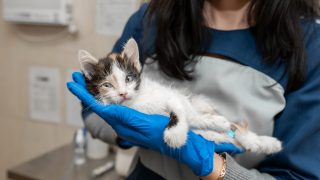
Veterinarians are often the only witnesses—other than the perpetrator themselves—to the signs and symptoms of animal cruelty. They also have the education and experience to identify those signs when they see them. Veterinary reporting, as the name suggests, refers to laws requiring veterinarians to report suspected cruelty, and/or giving them civil immunity for reporting in good faith. Such immunity is necessary to protect the veterinarian from retaliatory lawsuits. This has been a continuing trend over the past two decades. In 2005, only 21 states and 1 territory had laws requiring or explicitly permitting veterinarians to report suspected animal cruelty. As of December 2025, those numbers are up to 44 states and 2 territories with laws specifically addressing veterinary reporting. It’s important to note that even if a state does not explicitly have a law permitting veterinarians to report suspected cruelty, veterinarians are still free to do so in all 50 states.
Animal victims can’t speak for themselves, so it’s absolutely vital that those frontline workers who are most likely to witness animal cruelty in the community — like veterinarians and social service workers — are not only empowered, but required to report animal cruelty to the authorities,” says Lora Dunn, Director of the Criminal Justice Program. “We’re thrilled to see more states taking the important step of not just allowing, but mandating that these stakeholders report animal abuse and neglect, for the sake of the animal victims.


You Can Protect Animals
Since 1979, the Animal Legal Defense Fund has led the charge to win animals the legal protection they so desperately need—and deserve. Your generous gift will assure that we can continue to take on cases that advance the interests of animals.